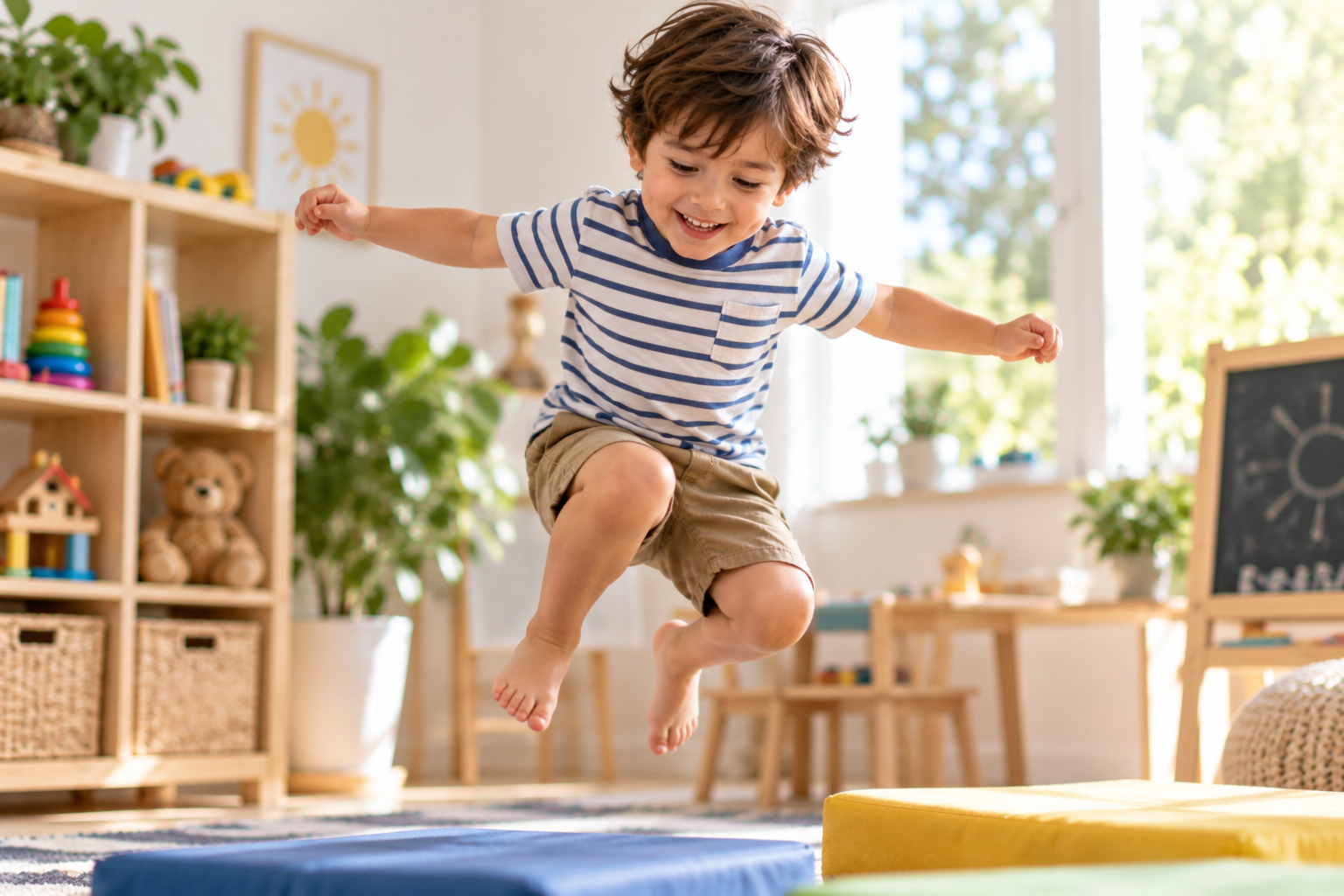
Why Movement Matters More Than We Think: Your Child’s Body Is Preparing the Brain to Learn
Have you ever asked your child to sit still and wondered why it seems so difficult?
Perhaps they are constantly moving their feet.
They wiggle in their chair.
They get up.
They climb.
They run.
They roll around on the floor.
They want to touch everything around them.
And sometimes, as adults, our first thought is:
“Why can’t you just sit still?”
But what if movement isn’t the problem?
What if movement is part of the solution?
For young children, movement is not simply something they do when they have finished learning.
Movement is one of the ways they learn.
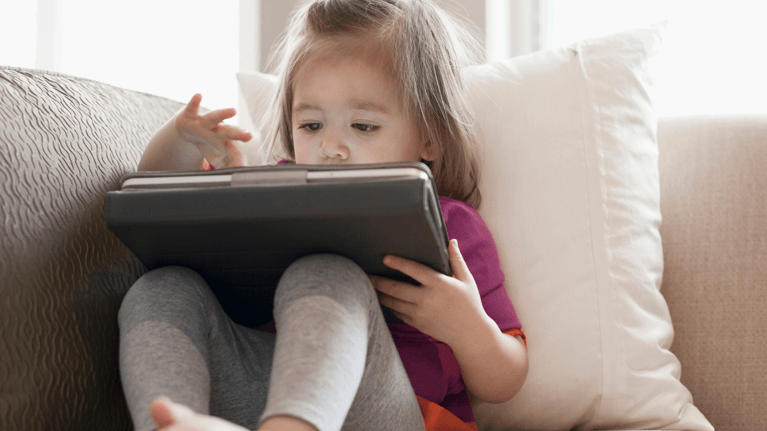
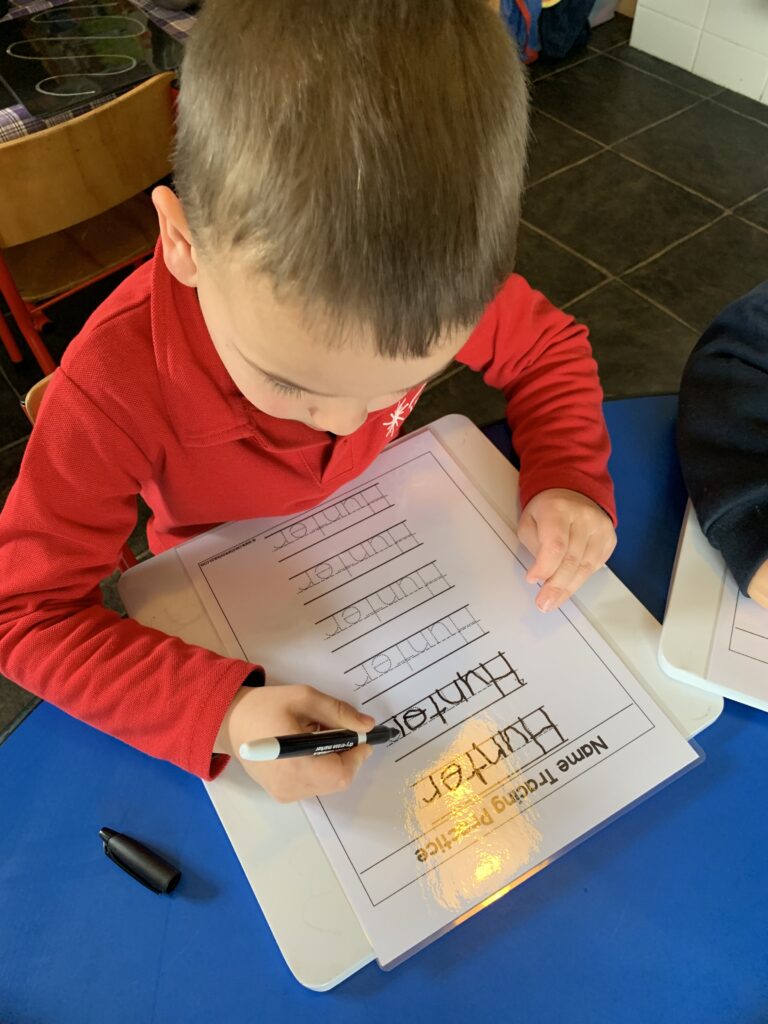
Before Children Can Write, They Need to Learn How to use Their Bodies
Imagine asking a young child to sit at a table, hold a pencil correctly, write their name and concentrate on a task.
It seems like one simple activity.
But look more closely.
The child needs to:
- control their posture
- stabilise their body
- coordinate their hands
- coordinate their eyes with their hands
- understand where their body is in space
- control small movements of their fingers
- maintain attention
- process visual information
- coordinate what they see with what they are doing.
Writing doesn’t begin with the pencil.
It begins much earlier—with development.
Maria’s motor-development work describes motor development as the process of learning to move, control and coordinate the body, and explains that as children gain control of their bodies, they become increasingly able to explore the world around them.
This is why the early years matter so much.
Movement Gives Children a Way to Experience the World
A young child doesn’t learn about their environment simply by being told about it.
They touch it.
They carry it.
They climb over it.
They crawl underneath it.
They push it.
They pull it.
They throw it.
They balance on it.
They build with it.
They take it apart.
They try again.
Every one of these experiences gives the child information.
Where am I?
How does this feel?
How far away is it?
How much force should I use?
Can I reach it?
Can I balance?
What happens if I move this?
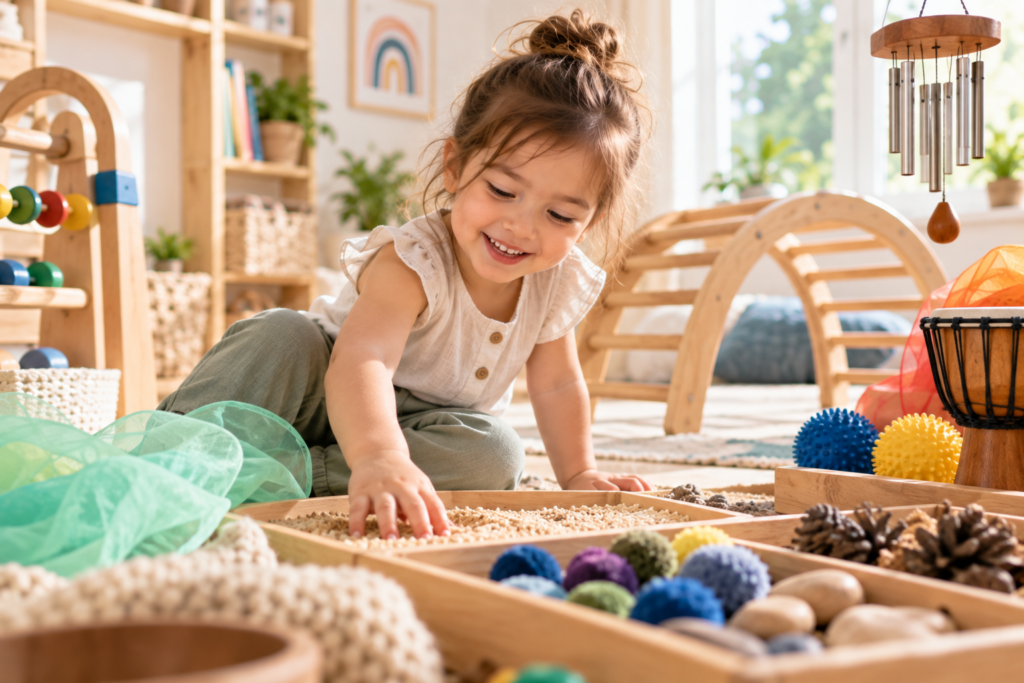
Movement and sensory experiences therefore become an important part of how children interact with and understand their environment.
Maria’s sensory integration work describes sensory processing as the brain’s ability to receive information through the senses, organise it and respond to the situation.
The moving child is therefore not simply “being active.”
They are experiencing.
And through experience, they are learning.
Gross Motor Development Comes First
One of the most important things for parents and educators to understand is that development builds upon earlier development.
Children first develop control over larger movements of the body.
These are their gross motor skills.
Running.
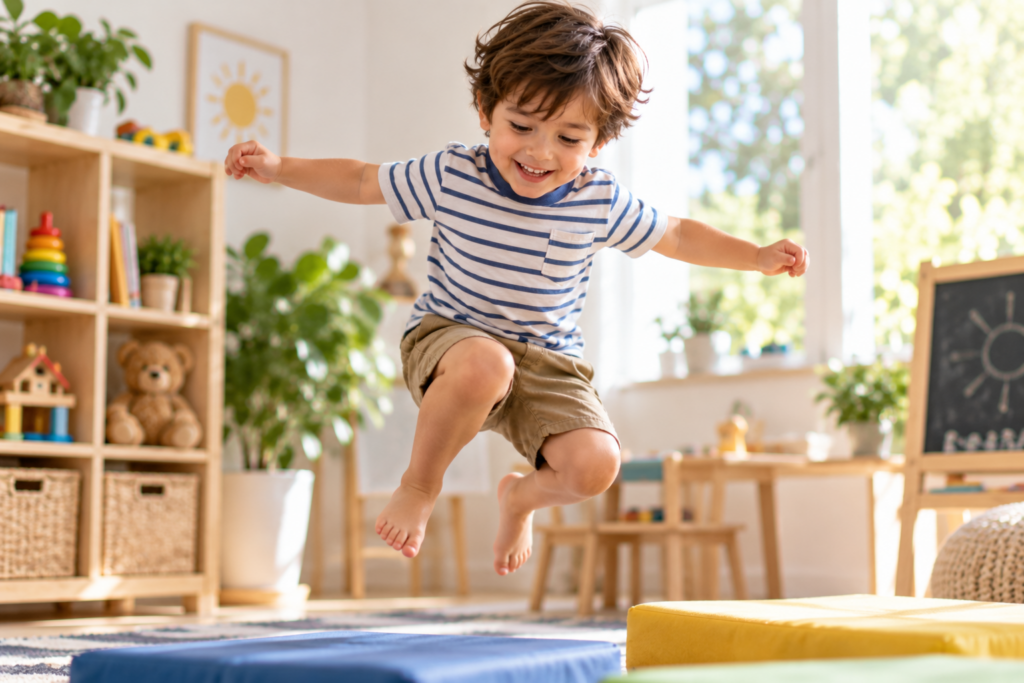
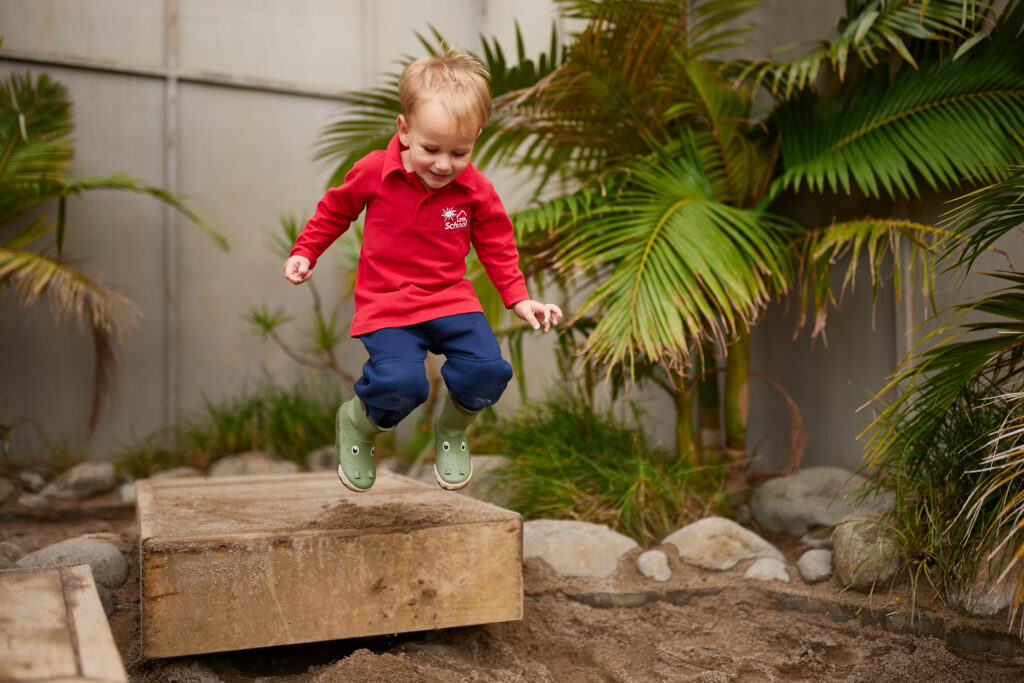
Jumping.
Climbing.
Balancing.
Crawling.
Walking.
Pushing.
Pulling.
Moving their arms, legs and torso.
As these abilities develop, children gradually become able to perform increasingly refined movements.
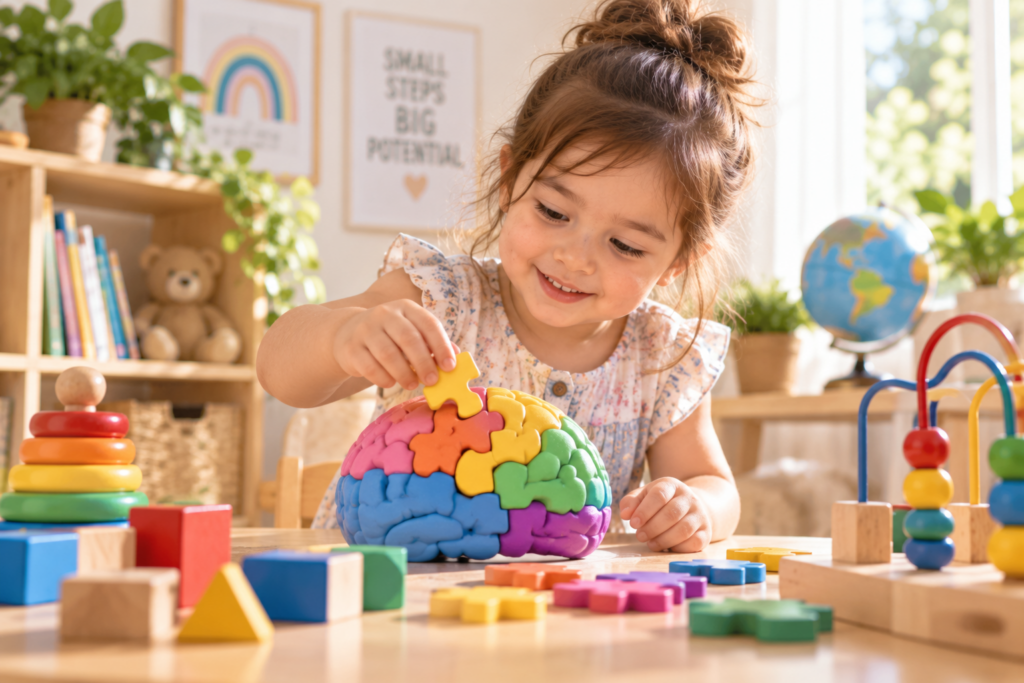
This includes the development of fine motor skills—the coordinated movements of the hands, fingers and wrists, together with visual control.
Maria’s motor-development material explains the relationship between gross and fine motor development and highlights the importance of giving children opportunities to develop both.
This gives us something important to remember:
Don’t rush the small movements while forgetting the big ones.
Sometimes we become very focused on pencil control, handwriting, cutting or other fine motor tasks.
But the child’s body is a whole system.
Development doesn’t happen in isolated pieces.
The Child Who is Climbing May be Preparing for Something you Cannot Yet See
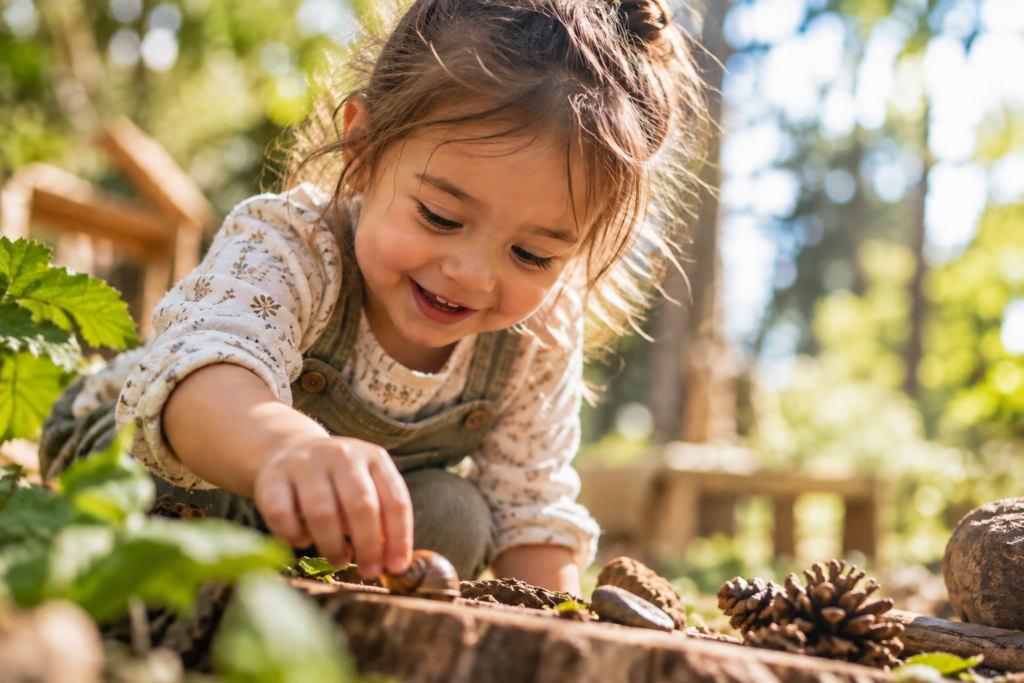
Picture a child climbing outdoors.
They reach for the next surface.
They shift their weight.
They place their foot carefully.
They pull themselves upward.
They balance.
They look where they are going.
They adjust their movement.
They try again.
To an adult, this might simply look like climbing.
But the child is experiencing movement, balance, coordination and spatial relationships.
These are the kinds of developmental experiences that Maria’s sensory-motor and vestibular/proprioceptive courses place at the centre of children’s development.
This is why we should be careful about measuring learning only by what appears on a piece of paper.
Some of the most important learning happening in early childhood cannot be seen on a worksheet.
What happens when children don't get enough opportunities to move?
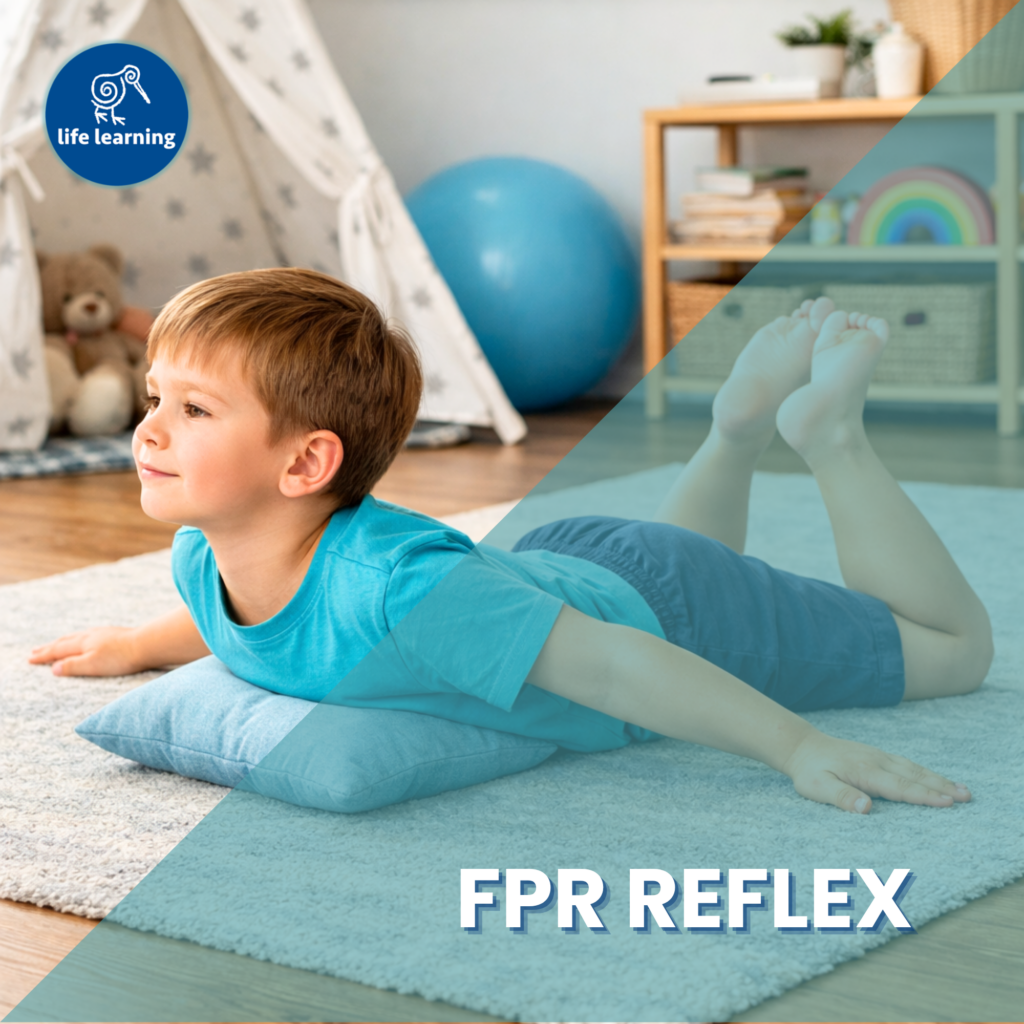
Children need opportunities to develop their bodies through experience.
Maria’s motor-development material emphasises that children who have opportunities to participate in activities that develop gross and fine motor skills have more opportunities to develop movement and cognitive skills.
This doesn’t mean that every child needs to perform the same activity.
It means that children need rich opportunities to move, explore and develop.
A child might find these opportunities through:
- outdoor play
- climbing
- crawling
- balancing
- running
- jumping
- ball games
- construction
- sand play
- messy play
- playdough
- drawing
- cutting
- pouring
- stacking
- weaving
- manipulating objects
- cross-pattern activities.
Many of these types of experiences also appear throughout Maria’s practical developmental activities and course framework.
Movement Doesn't Need to Look like Exercise
This is especially important.
Early childhood movement doesn’t have to mean:
“Okay children, everyone exercise for 20 minutes.”
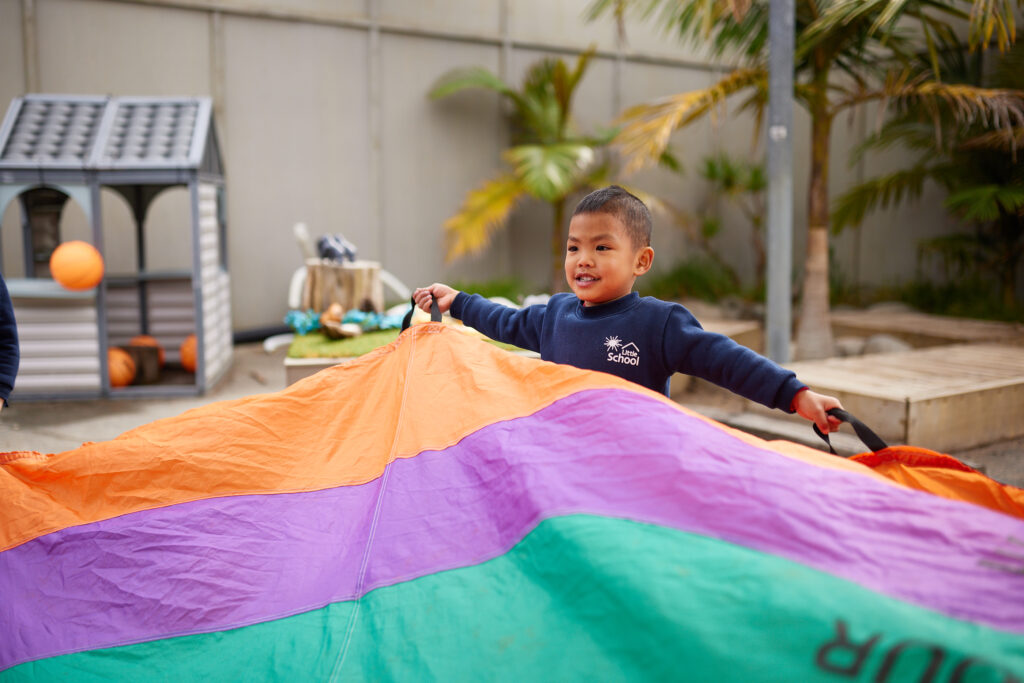
It can happen naturally through play.
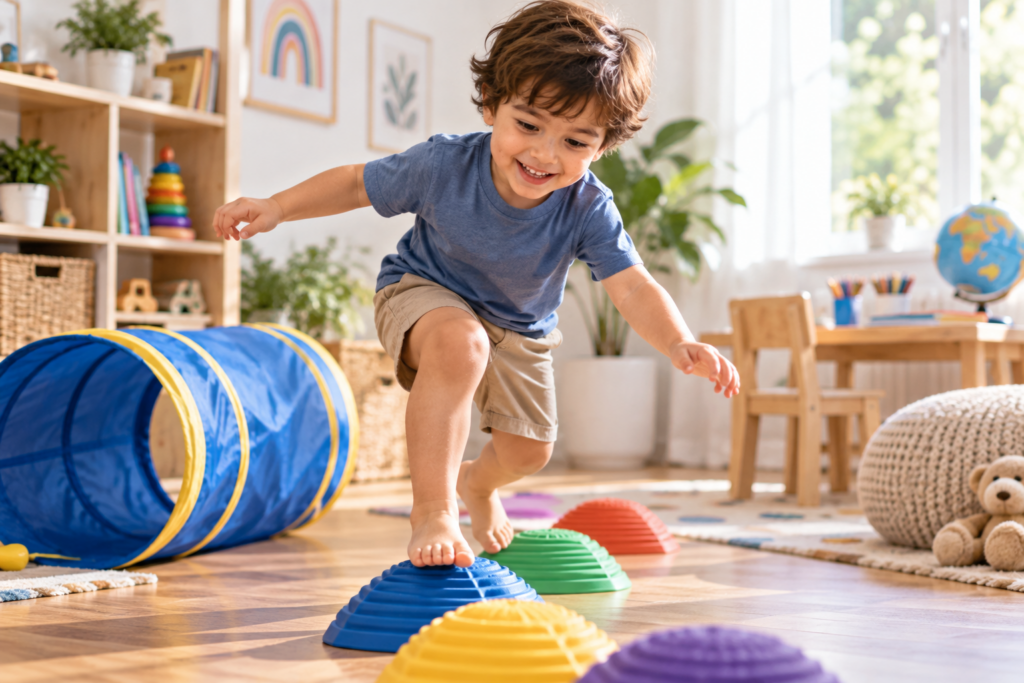
A child crawling through a tunnel.
A child carrying blocks across the room.
A child climbing onto a platform.
A child pushing a box.
A child rolling a ball.
A child dancing to music.
A child digging in the garden.
A child balancing along a line.
A child pretending to be an animal.
A child building a tower and moving around it.
The child may never think:
“I am developing my motor skills.”
And they don’t need to.
They are playing.
The development happens through the experience.
Parents: You Don't Need Expensive Equipment
One of the beautiful things about movement-based learning is that it doesn’t always require sophisticated equipment.
Look around your home.
What can your child carry?
What can they build?
What can they crawl through?
What can they pour?
What can they push?
What can they manipulate?
What can they balance?
What can they explore safely?
A cardboard box can become a tunnel.
A cushion can become an obstacle.
A container can become a pouring activity.
A pile of blocks can become a construction challenge.
A blanket can become part of an imaginative game.
A safe outdoor space can become an enormous learning environment.
The question isn’t always:
“What educational toy should I buy?”
Sometimes the better question is:
“What opportunities can I create?”
Teachers: Look at Your Classroom Differently
The same principle applies to educators.
Instead of looking at your classroom and asking:
“Where will the children sit?”
also ask:
“Where will the children move?”
Where can they:
- reach?
- crawl?
- carry?
- build?
- climb?
- manipulate?
- balance?
- create?
- explore?
Maria’s approach to sensory-motor development places importance on providing developmental opportunities through both play environments and small-group experiences.
This means the environment can become more than a place where teaching happens.
It can become a place where development happens.
And Then Something Wonderful Happens
The more children experience their bodies and their environment, the more opportunities they have to discover what their bodies can do.
They begin to understand:
I can climb.
I can balance.
I can reach.
I can build.
I can carry this.
I can try again.
I can do it.
That last one matters.
“I can do it.”
Movement isn’t only about physical development.
It can also become part of a child’s growing sense of confidence, independence and capability.
So the Next Time Your Child Can't Sit Still…
Before saying:
“Stop moving.”
pause.
Ask yourself:
Does this child need movement?
Maybe they need to run.
Maybe they need to climb.
Maybe they need to crawl.
Maybe they need to explore.
Maybe they need to use their hands.
Maybe they need to experience their environment.
Maybe they simply need an opportunity to move before we ask them to sit and concentrate.
This doesn’t mean that children should never sit still or that movement automatically solves every learning difficulty.
It means we should recognise something fundamental about early childhood:
Children’s bodies and brains develop together.
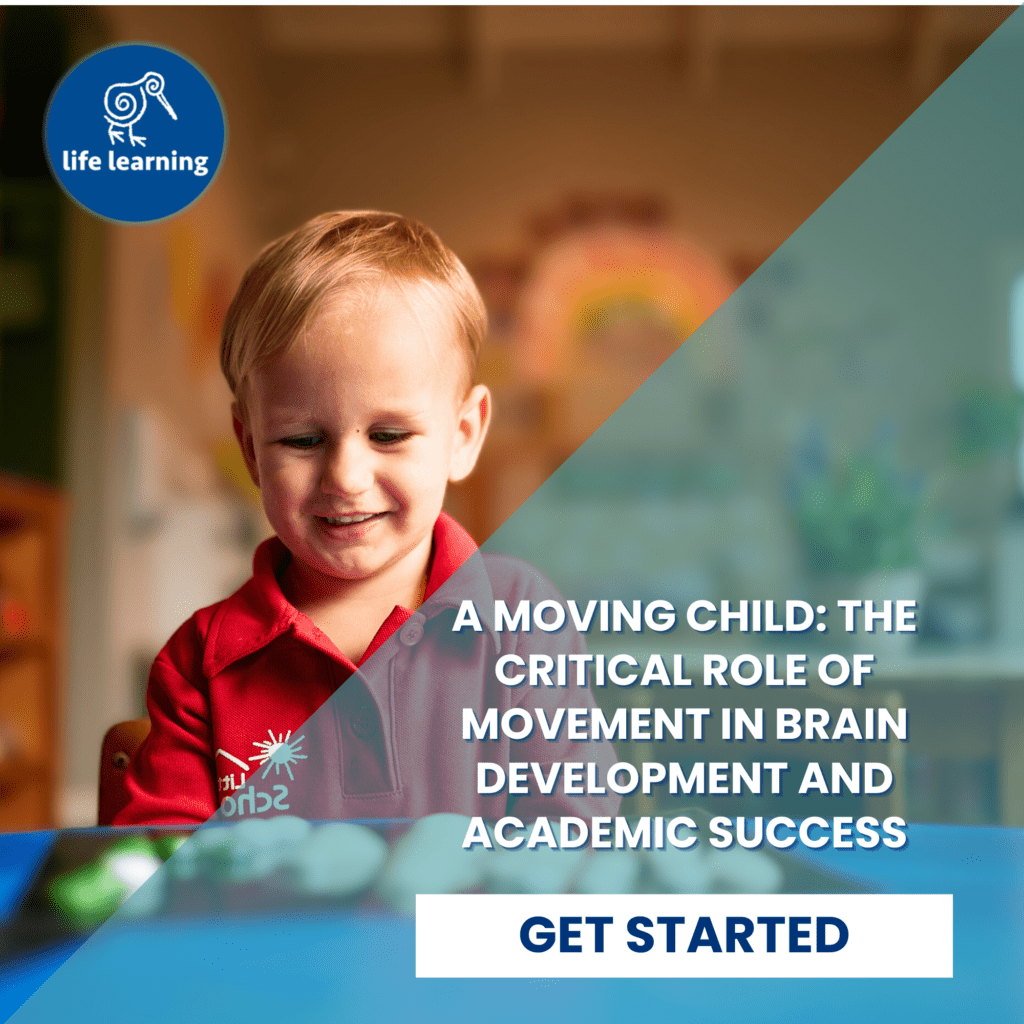
Maria’s course framework specifically explores this relationship through Sensory-Motor Development, Sensory Integration, A Moving Child, Vestibular and Proprioceptive Development, Coordination and the Importance of Play.
The Moving Child is a Learning Child
We sometimes look at childhood through the lens of what we want children to accomplish:
Read.
Write.
Count.
Spell.
Sit.
Listen.
Follow instructions.
But before all of these things, children are developing something much more fundamental:
their relationship with their own bodies and the world around them.
They are learning where they are.
How they move.
What they can do.
What happens when they try.
How things feel.
How things change.
How they can solve problems.
How they can interact with others.
And slowly, through thousands of ordinary experiences, the foundations for later learning are being built.
So let them move.
Let them explore.
Let them climb when it is safe.
Let them crawl.
Let them carry.
Let them build.
Let them dance.
Let them play.
And sometimes, when we see a child moving constantly, instead of asking:
“Why won’t you sit still?”
perhaps we should ask:
“What is your child learning through movement?”
Because movement may not be taking your child away from learning.
It may be helping prepare them for it.
Continue the Journey
Understanding the relationship between movement, sensory development and learning is explored throughout Life Learning’s professional development courses, including Sensory-Motor Development, A Moving Child, Understanding Sensory Integration, The Vestibular System, Proprioception & Spatial Awareness, Hand-Eye & Foot-Eye Coordination, and The Importance of Play.
Featured Life Learning Courses