Why Movement Matters More Than We Think: Your Child’s Body Is Preparing the Brain to Learn
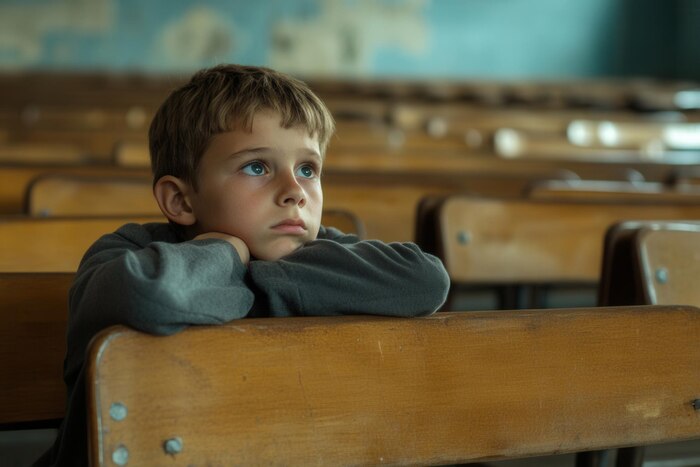
“Please sit down.”
“Keep your hands to yourself.”
“Stop moving.”
“Pay attention.”
“Look at me.”
For many young children, these are instructions they hear throughout the day.
But have we ever stopped to ask ourselves what we are actually asking a developing child to do when we tell them to sit still and learn?
Because sitting still is not simply a matter of choosing not to move.
A child needs to develop body control, balance, coordination, sensory processing and postural control before sustained sitting and classroom learning become easier.
And sometimes, the child who appears unable to sit still may not be refusing to learn.
They may still be developing the foundations that help them learn.
Learning Doesn't Begin at the Table
When we picture school readiness, we often think about letters, numbers, colours, shapes and being able to follow instructions.
But Maria’s work takes us further back.
Before children can comfortably engage in many classroom tasks, they need opportunities to develop their bodies and their ability to move through their environment.
Her motor-development material explains that motor development involves learning to move, control and coordinate the body, and that as children gain control of their bodies, they become increasingly able to explore their surroundings.
This is why movement is not separate from learning.
Movement helps build the foundations upon which learning can take place.
What Does Sitting Actually Require?
Watch a child sitting at a table.
It looks simple.
But underneath that quiet moment, the child is doing quite a lot.
They need to maintain their posture.
They need to stabilise their body.
They need to coordinate their eyes.
They need to use their hands.
They need to know where their body is in relation to the table.
They need to control their movements.
They need to process what the teacher is saying.
They need to focus on the task.
And they need to remain engaged long enough to complete it.
This is why Maria’s work places such importance on motor development and sensory-motor development as foundations for academic readiness.
A child doesn’t suddenly become ready for classroom learning because they reach a particular birthday.
Readiness develops through experiences.
The Body and Brain Work Together
Our bodies are constantly sending information to our brains.
Where are my arms?
Where are my feet?
Am I balanced?
Am I moving?
How much force am I using?
Where is my body in relation to other objects?
Maria’s sensory integration article explains that the brain receives information through multiple sensory systems, including vision, touch, hearing, the vestibular system and proprioception.
The brain then organises that information and responds to the situation.
This means that a child’s ability to participate in learning isn’t only about what they can see or hear.
It also involves what they are experiencing through their body.
What Is Proprioception?
The word can sound complicated.
But the idea is something we experience every day.
Proprioception helps us understand the position and movement of our body.
Close your eyes and touch your nose.
You don’t need to look at your hand to know where it is.
Your body is receiving information about position and movement.
Young children are continually developing these abilities through movement and physical experiences.
Pushing.
Pulling.
Climbing.
Carrying.
Crawling.
Jumping.
Balancing.
Manipulating objects.
These experiences give children opportunities to learn about their bodies and how their bodies interact with the environment.
Maria’s course framework specifically explores proprioception, the vestibular system and spatial awareness as important areas of children’s development.
And Then There Is the Vestibular System
The vestibular system is closely associated with balance, movement and head position.
Think about a child on a swing.
They move backwards.
Then forwards.
Their head changes position.
Their body responds to movement.
They experience speed and direction.
They adjust their posture.
They are constantly receiving information.
Or think about a child climbing.
They are changing their body’s position while trying to remain balanced.
These experiences are part of why movement opportunities are so valuable during early childhood.
Maria’s course on The Vestibular System, Proprioception and Spatial Awareness specifically focuses on these systems and their relationship to children’s development and learning.
So Why Does My Child Keep Moving?
This is where we need to be careful.
A child who moves frequently may simply be a young child who enjoys movement.
A child may also be tired, excited, bored, uncomfortable or responding to the environment around them.
There isn’t one explanation for every child.
But instead of immediately thinking:
“This child needs to stop moving.”
we can begin with observation.
Ask:
When does the child move most?
What happens immediately before it?
What happens when movement is provided?
Does the child engage differently after active play?
Is the learning environment offering enough opportunities to move?
These questions help us understand the child rather than simply reacting to the behaviour.
Movement Can Be Part of the Learning Environment
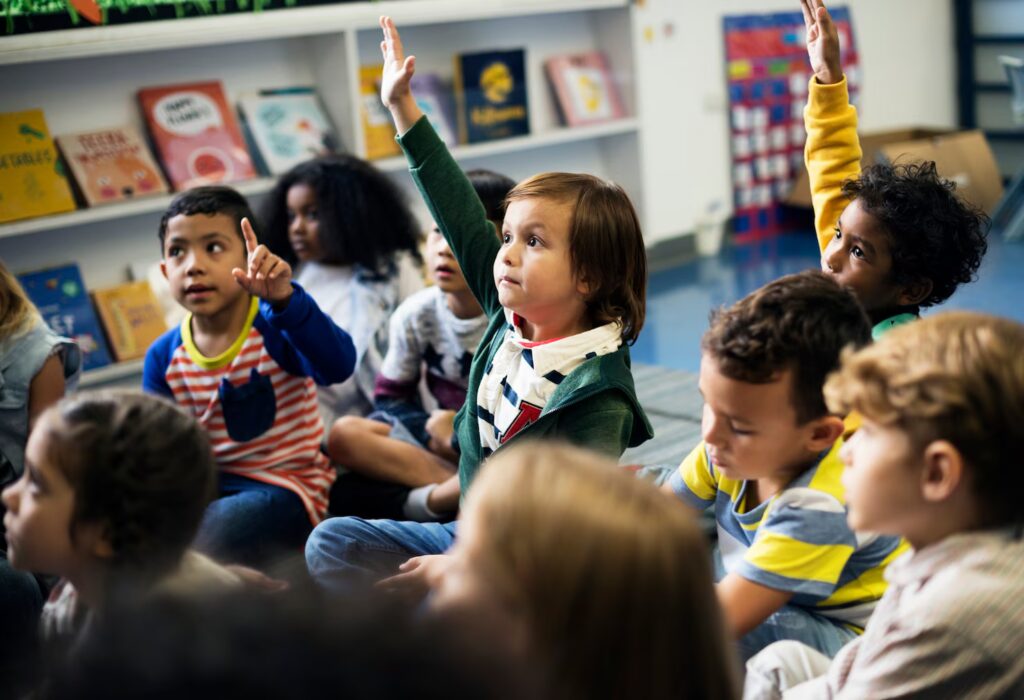
Imagine a classroom where children are expected to remain seated for long periods.
Now imagine another environment where children have opportunities to:
- move between learning areas
- build
- carry materials
- manipulate objects
- engage in active play
- explore outdoors
- participate in movement activities
- work collaboratively
- change their position during learning.
Which environment gives children more opportunities to use their developing bodies?
Maria’s approach to sensory-motor development includes creating environments where children encounter developmental experiences during play and small-group activities.
This is an important shift.
Instead of asking how to make children fit the environment, we can ask how the environment can better support the developing child.
A Moving Child Is Not a Child Who Isn't Learning
Consider a child carrying blocks across the room.
They are moving.
But they are also deciding where to place them.
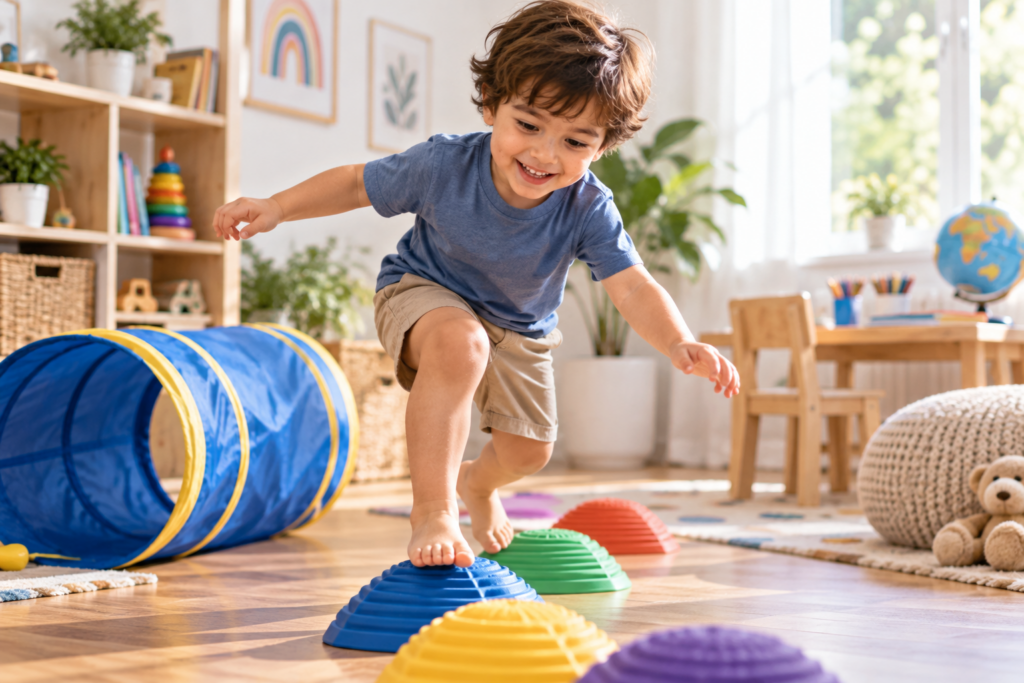
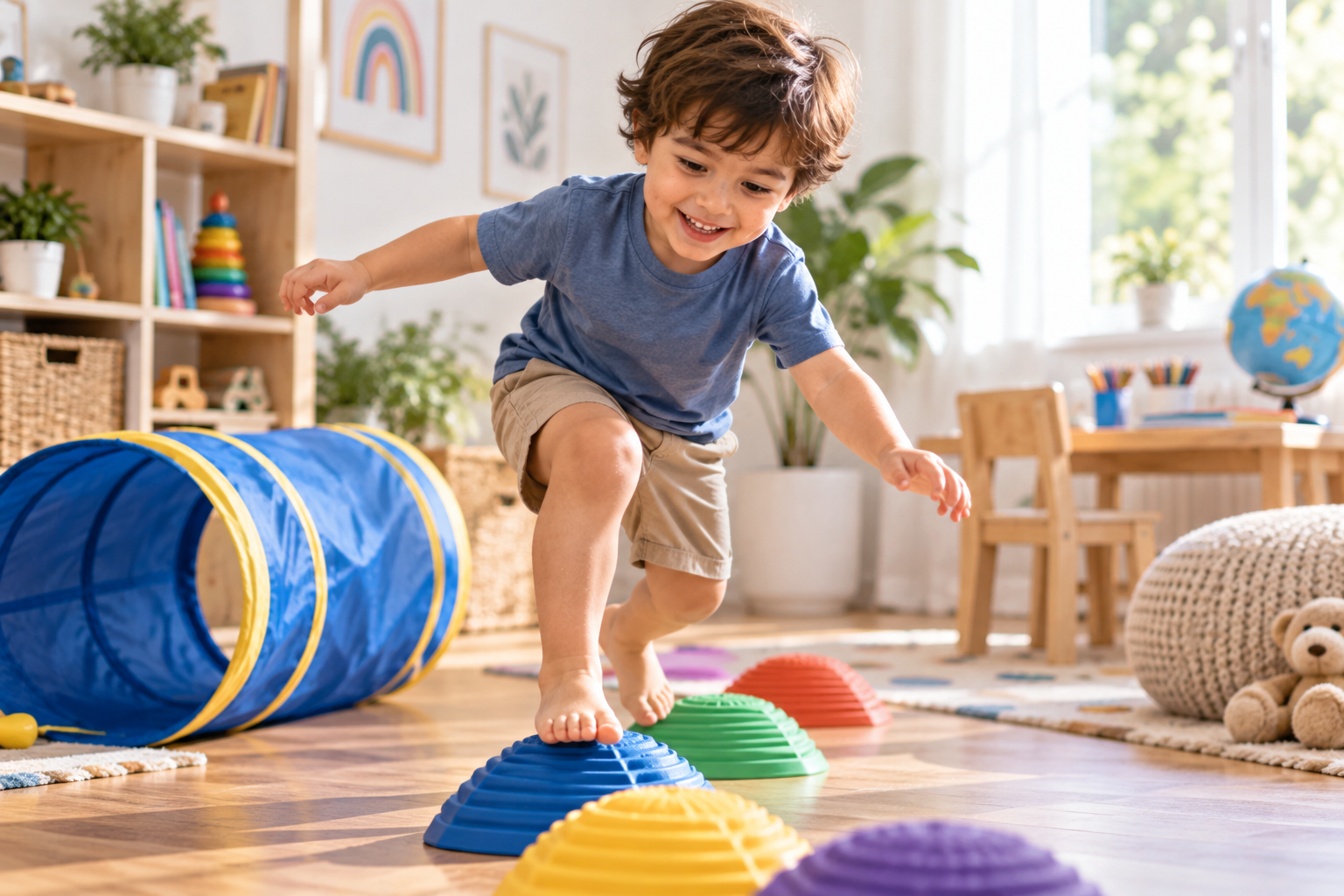
A child crawling through a tunnel is moving.
But they are also experiencing space and body position.
A child pushing a heavy object is moving.
But they are also experiencing force.
A child balancing on a beam is moving.
But they are also adjusting their body.
A child dancing to music is moving.
But they are also listening, remembering patterns and responding.
Movement can provide opportunities for children to think while their bodies are active.
This is one of the central ideas behind Maria’s A Moving Child course, which explores the relationship between movement, brain development and children’s learning.
What About Fine Motor Skills?
Sometimes we focus heavily on activities such as:
- writing
- drawing
- cutting
- colouring
- buttoning
- manipulating small objects.
These are important skills.
But fine motor development doesn’t exist in isolation.
Maria’s motor-development work explains that gross motor skills involve control of the larger muscles of the body, while fine motor skills involve the smaller movements of the hands, fingers and wrists together with visual coordination.
This reminds us that children’s development is interconnected.
A child doesn’t leave their whole body behind when they sit down to draw.
The whole child comes to the table.
What Can Parents Do at Home?
You don’t need to turn your home into a classroom.
Simply look for opportunities for movement throughout the day.
Let your child:
Carry safe objects.
Push and pull appropriate items.
Climb safely.
Crawl through spaces.
Dance to music.
Balance where appropriate.
Play with balls.
Build towers.
Play outdoors.
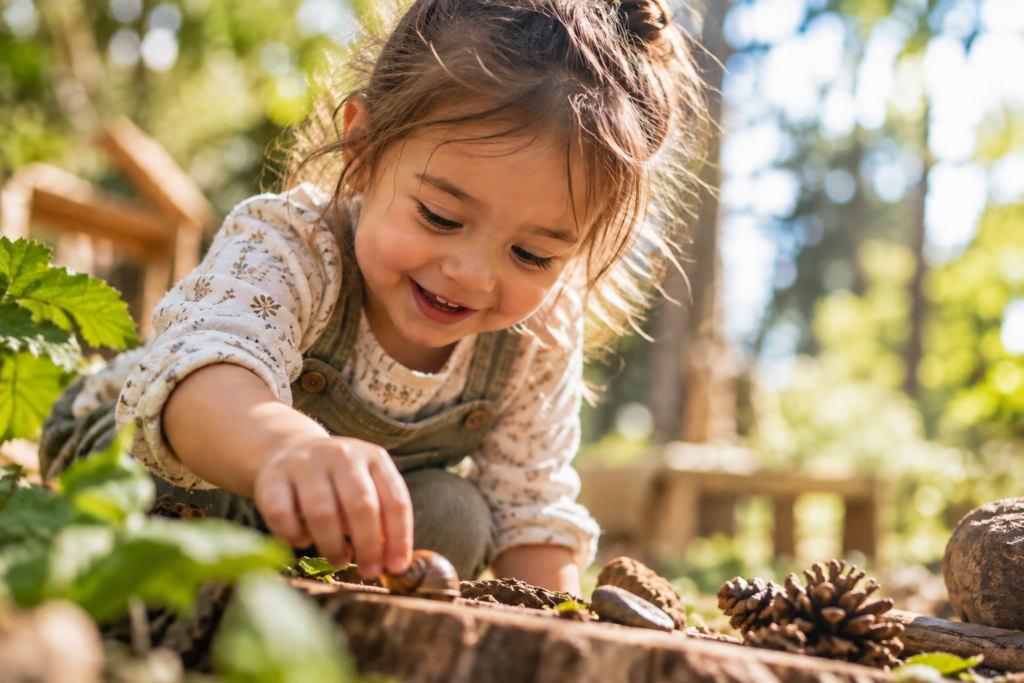
Explore natural environments.
Use their hands to manipulate different materials.
The goal isn’t to create a perfect developmental programme at home.
The goal is to provide rich opportunities for children to move and explore.
What Can Educators Do?
Teachers can begin by looking at the learning environment through the eyes of a moving child.
Ask yourself:
Where can children move?
Where can they use their whole bodies?
Where can they push and pull?
Where can they balance?
Where can they climb safely?
Where can they manipulate materials?
Where can they choose how they participate?
Maria’s broader course framework brings these ideas together through sensory-motor development, movement, play, loose parts, outdoor learning and the environment as the third teacher.
A strong early childhood environment doesn’t simply contain activities.
It creates possibilities.
Before We Ask Children to Sit, Ask What Their Bodies Need
This doesn’t mean children should never sit.
Of course they need opportunities to listen, engage in group experiences, communicate and participate in quieter activities.
But perhaps we should reconsider the idea that stillness automatically means attention.
Sometimes a child may learn while standing.
Sometimes while manipulating something with their hands.
Sometimes after outdoor movement.
Sometimes after a physical experience.
Sometimes they need to move first and then return to a quieter task.
The answer will not be identical for every child.
That’s why observation matters.
School Readiness Is More Than Knowing ABCs
A child can know their letters and numbers and still need support with physical and sensory foundations.
School readiness includes much more than academic knowledge.
Children are developing:
- Body control
- Coordination
- Balance
- Spatial awareness
- Sensory processing
- Communication
- Independence
- Social skills
- Self-regulation
and many other capabilities that support participation in learning.
Maria’s motor-development work connects motor development and cognition with school readiness and academic learning.
This is why the early years should not be about rushing children toward formal academics.
The early years are about building strong foundations.
Let Children Move
Perhaps we need to change one small phrase.
Instead of:
“Stop moving so you can learn.”
we might sometimes say:
“Let’s give your body an opportunity to move so you can be ready to learn.”
Not every child will respond in the same way.
Not every movement difficulty has the same cause.
And movement alone cannot explain every learning or behavioural challenge.
But one thing remains important:
Children are developing through their bodies every day.
The more we understand this, the better equipped we become to create environments that respect the whole child.
Because children don’t leave their bodies at the door when they enter the classroom.
They learn through them.
A Question for Today
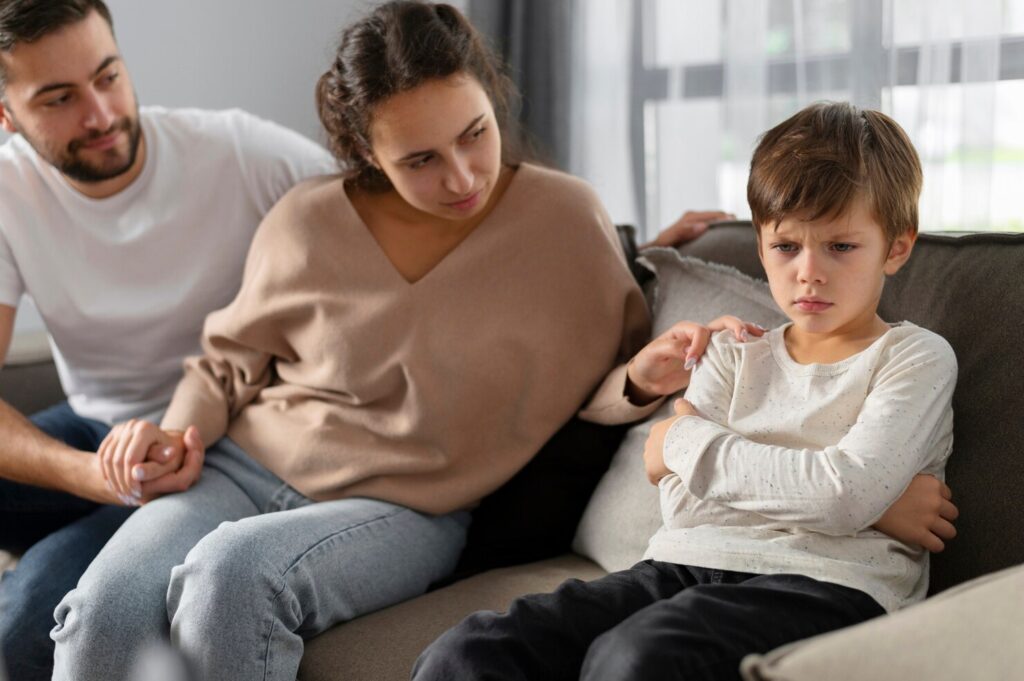
The next time you see a child struggling to sit still, pause before correcting them.
Watch.
Observe.
Ask:
“What is this child communicating through their movement?”
And then ask yourself:
“What opportunity could I provide that might help?”
Sometimes the answer may be movement.
Sometimes it may be rest.
Sometimes it may be connection.
Sometimes it may be a different environment.
And sometimes it may simply be more time.
Our role is not to stop development from happening.
Our role is to create the conditions in which development can happen.
Continue the Journey
Understanding the relationship between movement, sensory development and learning is explored throughout Life Learning’s professional development courses, including Sensory-Motor Development, A Moving Child, Understanding Sensory Integration, The Vestibular System, Proprioception & Spatial Awareness, Hand-Eye & Foot-Eye Coordination, and The Importance of Play.
Featured Life Learning Courses