It is a phrase many parents and educators say throughout the day.
At the table.
During story time.
In the classroom.
While waiting.
During group activities.
And when a child keeps getting up, rocking, fidgeting, touching things or moving around, it can be easy to think:
“Why can’t they just sit still?”
But before we see movement as a problem, there is another question worth asking:
What is the child’s body trying to do?
Sitting Still Is Actually Quite a Complex Skill
To an adult, sitting looks simple.
We sit down, remain in one place and listen.
But for a young child, staying seated requires the body to do many things at once.
The child needs to maintain posture, coordinate their muscles, manage balance, process sensory information and remain engaged with what is happening around them.
The sensory-motor material describes sensory and motor development as foundational to learning.
It explains that the brain receives information through the senses, organizes that information and then responds appropriately.
So when we ask a child to sit and learn, we are not asking only for attention.
We are also asking their developing body to support that attention.
Movement May Be Part of Learning
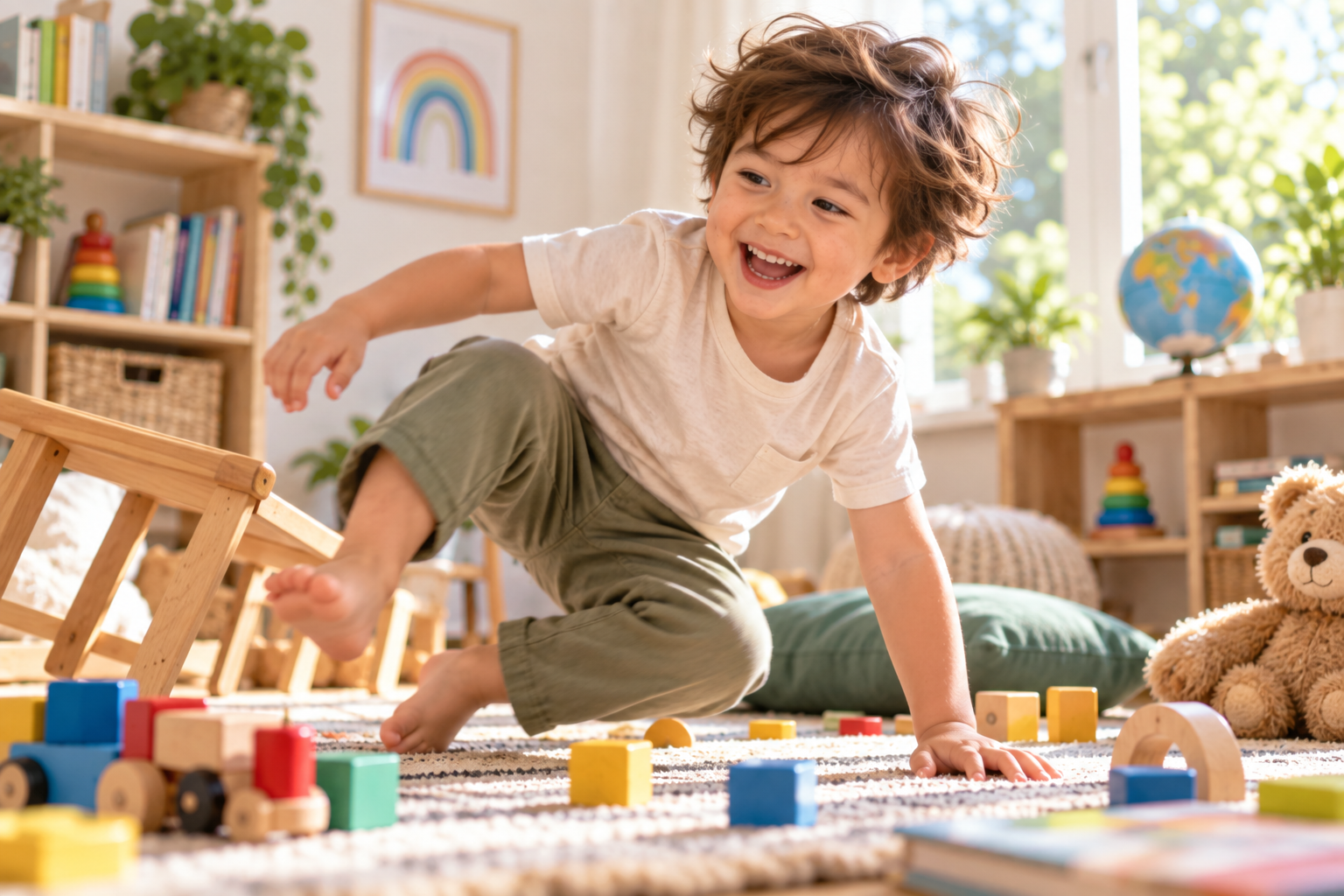
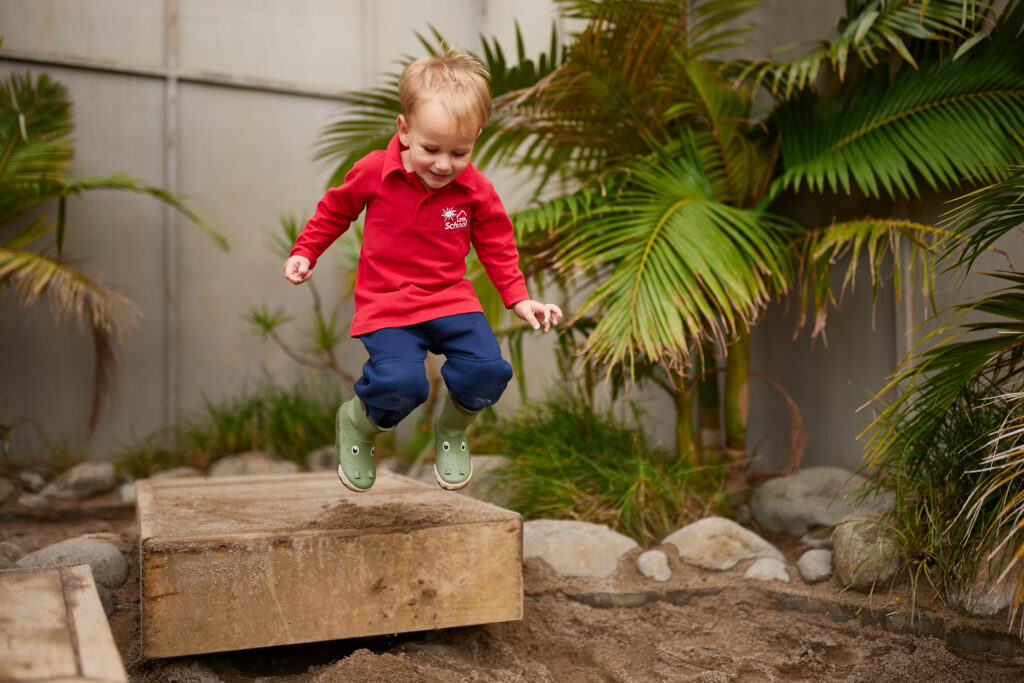
Children naturally learn through movement.
They crawl.
They climb.
They jump.
They balance.
They push.
They pull.
They carry.
They roll.
They reach.
They manipulate objects with their hands.
These experiences provide opportunities for sensory and motor development.
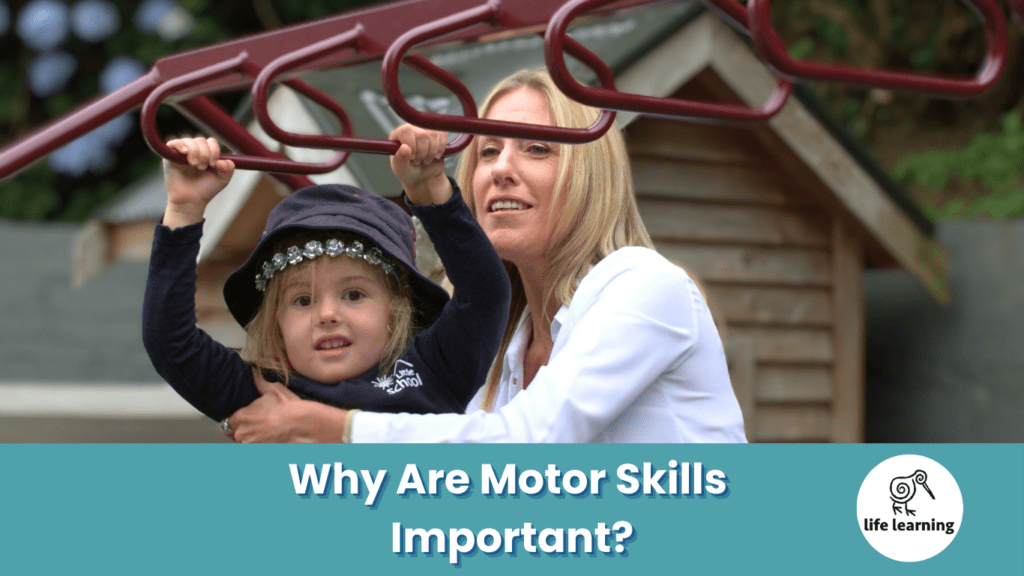
The motor-development material explains that children develop their ability to move and control their bodies as they explore their surroundings, and that motor development provides an important foundation for cognitive development and school readiness.
This is why movement should not automatically be separated from learning.
Sometimes movement is part of the pathway toward learning.
What If the Child Needs More Movement?
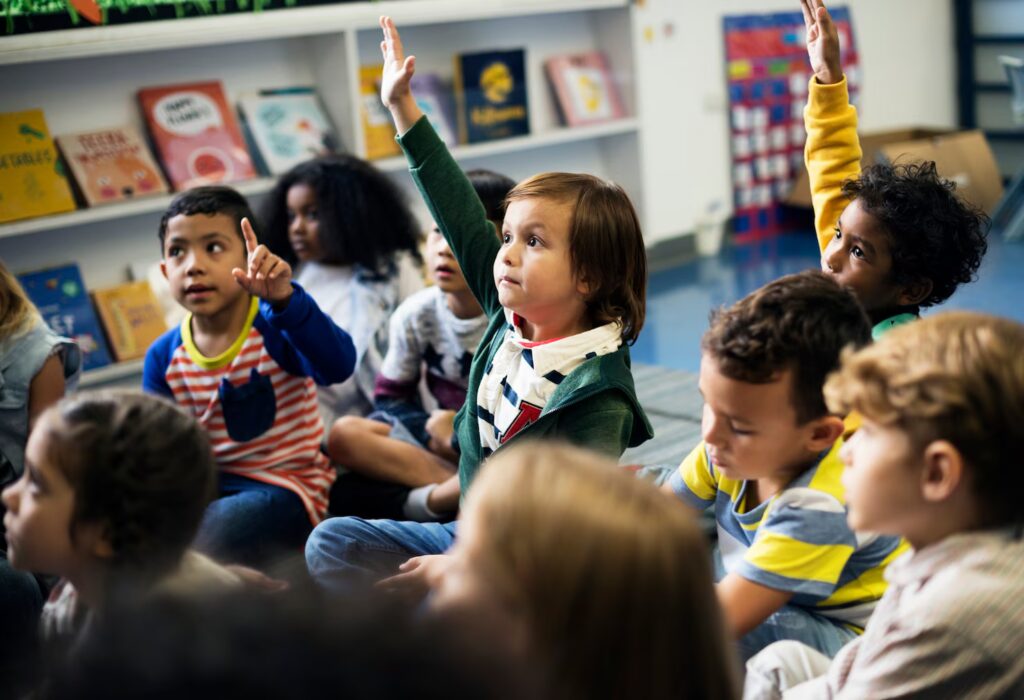
Imagine a child sitting during a group activity.
After a few minutes, they begin:
Wiggling in their chair
Changing position
Standing up
Leaning against the table
Touching objects nearby
Moving their feet
Looking around the room
The immediate response might be:
“Stop moving.”
But an educator can pause and observe.
When does the movement happen?
Does it happen during long periods of sitting?
Does the child engage more successfully after physical activity?
Is the environment providing enough opportunities for movement?
Is the activity appropriate for the child’s developmental stage?
Observation doesn’t mean allowing every behaviour without boundaries.
It means trying to understand what is happening before deciding how to respond.
The Vestibular System and Movement
One of the sensory systems highlighted in Maria Johnson’s sensory-motor work is the vestibular system.
The vestibular system provides information related to balance, movement and head position.
Proprioception provides information about the position and movement of muscles and joints.
Children encounter these systems throughout ordinary play.
Think about:
Swinging
Rolling
Climbing
Balancing
Crawling
Spinning
Jumping
Moving over different surfaces
These aren’t simply ways to “burn energy.”
They provide sensory and movement experiences.
The primitive-reflex material also places strong emphasis on movement, balance and coordination as children develop and practise increasingly controlled movement.
Sitting Should Not Be the Only Measure of Attention
One important question for educators is:
Does learning always have to look like sitting quietly?
A child might listen while standing.
Another might learn while moving between activities.
Another may concentrate better after gross-motor play.
Another may need to manipulate something with their hands while listening.
This does not mean that children never need to learn to sit, wait or participate in group experiences.
Those are valuable skills too.
But developmentally appropriate learning environments can provide a balance between movement and stillness.
The course catalogue’s A Moving Child course reflects this same framework, connecting movement with brain development, cognitive growth, attention and learning capabilities.
Gross Motor Skills Come Before Fine Motor Skills
Before expecting children to spend extended periods writing, drawing or manipulating small objects, it is important to consider the development of their larger movements.
Maria’s motor-development material distinguishes between gross motor skills and fine motor skills.
Gross motor skills involve the larger muscles of the arms, legs and torso and include activities involving coordination, balance and strength.
Fine motor skills involve smaller movements of the hands, fingers and wrists and require coordination between the brain, eyes and muscles.
The development of these skills is not an overnight process.
Children build control through experience.
Big movements provide opportunities for children to develop control of their bodies.
That developing control eventually supports increasingly precise movements.
Instead of Asking, “How Do I Make Them Sit?”
Try asking:
“What does this child need before sitting becomes easier?”
Perhaps they need more opportunities to move.
Perhaps the activity is too long.
Perhaps they need a different position.
Perhaps they need hands-on participation.
Perhaps the environment is not giving them enough opportunities for physical exploration.
Perhaps they are simply showing us that their developmental needs are different from what we expected.
The answer will not always be the same.
That is why observation matters.
Create a Movement-Friendly Learning Environment
A movement-rich environment doesn’t mean a classroom where everyone runs around all day.
It means creating intentional opportunities for children to use their bodies throughout the day.
For example:
Before a focused activity
Provide opportunities for climbing, crawling, balancing or active movement.
During learning
Allow children to manipulate materials, move between stations or participate physically where appropriate.
In the environment
Provide spaces where children can explore different forms of movement.
Outdoors
Give children opportunities for larger movements that may be difficult to provide indoors.
During transitions
Use songs, actions and movement rather than expecting every transition to involve prolonged sitting and waiting.
The goal is not more movement simply for the sake of movement.
The goal is meaningful movement within a developmentally supportive environment.
What About a Child Who Is Constantly Moving?
This is where we need to be careful.
Movement alone does not tell us why a child is moving.
There can be many reasons.
A child may be excited.
They may be tired.
They may be interested in something happening nearby.
They may need a movement opportunity.
They may be finding the activity difficult.
They may simply have a strong need for physical exploration.
So rather than immediately attaching a label to the behaviour, begin with observation.
What happens before the movement?
What happens after it?
What activities does the child engage with for longer?
What environments seem to support their participation?
These observations can help adults respond more thoughtfully.
We Don't Need to Choose Between Movement and Learning
Children do not learn only when they are sitting down.
They learn while moving.
They learn while exploring.
They learn while building.
They learn while climbing.
They learn while manipulating materials.
They learn while interacting with others.
They learn while experimenting.
They learn while playing.
The sensory-motor approach described in Maria’s work places these experiences within the broader foundation of learning and development.
So the next time a child gets up during a learning activity, pause before saying:
“Sit still.”
Ask yourself:
“What is this movement telling me?”
Sometimes the behaviour we are trying to stop is actually giving us valuable information about the child.
And when we learn to listen to the body as well as the words, we begin to see the child differently.
The Goal Isn't a Motionless Child
Early childhood isn’t about creating children who can sit perfectly still for long periods.
It is about helping children gradually develop the physical, sensory, cognitive, social and emotional foundations they need to participate, explore and learn.
Movement has a place.
Stillness has a place.
The skill is learning how to create an environment where children can develop both.
Because a child who moves isn’t necessarily a child who isn’t learning.
Sometimes, movement is part of how the child is learning.
At Life Learning MENA
Understanding children’s development changes the way we teach.
Our professional learning courses explore sensory-motor development, movement, sensory integration, vestibular and proprioceptive systems, midline and laterality, hand-eye coordination, play and other foundations that influence children’s learning experiences.
When educators understand what is happening beneath a child’s behaviour, they can create environments that respond to development rather than simply demanding compliance.
Because before we ask children to control their bodies, we need to understand how those bodies are developing.