Behaviour is communication.
A child who appears inattentive may be overwhelmed.
A child who is constantly moving may be seeking sensory input.
A child who appears oppositional may be anxious.
The best schools understand this. They look beyond behaviour and seek understanding before judgment.
A diagnosis should never become a label that limits a child’s potential.
A strong school understands that children do not all learn the same way.
Instead of expecting every child to fit one model, they provide multiple pathways for learning.
4. A Strength-Based Approach
This is one of the most important indicators of a supportive school. Listen carefully to the language used by staff.
Do they talk mostly about deficits?
- Do they talk mostly about strengths?
- Do they recognize what your child can do?
- Do they celebrate progress?
- Do they value individuality?
Children thrive when they are seen for their strength rather than constantly reminded of their challenges.
5. Emotional Safety Comes First
No child learns well when they feel unsafe. Emotional safety is the foundation of learning.
Ask yourself:
- Does the school feel welcoming?
- Do children appear calm?
- Are relationships valued?
- Do teachers genuinely know their students?
- Is kindness visible?
The most successful neurodiverse learners are often those who feel accepted, understood and emotionally secure.
6. A School That Values Movement
This is a big one. Many neurodiverse children regulate their nervous system. Unfortunately, some schools still expect children to sit for long periods.
Movement should not be viewed as a reward. It should be viewed as a learning tool.
Look for schools that include:
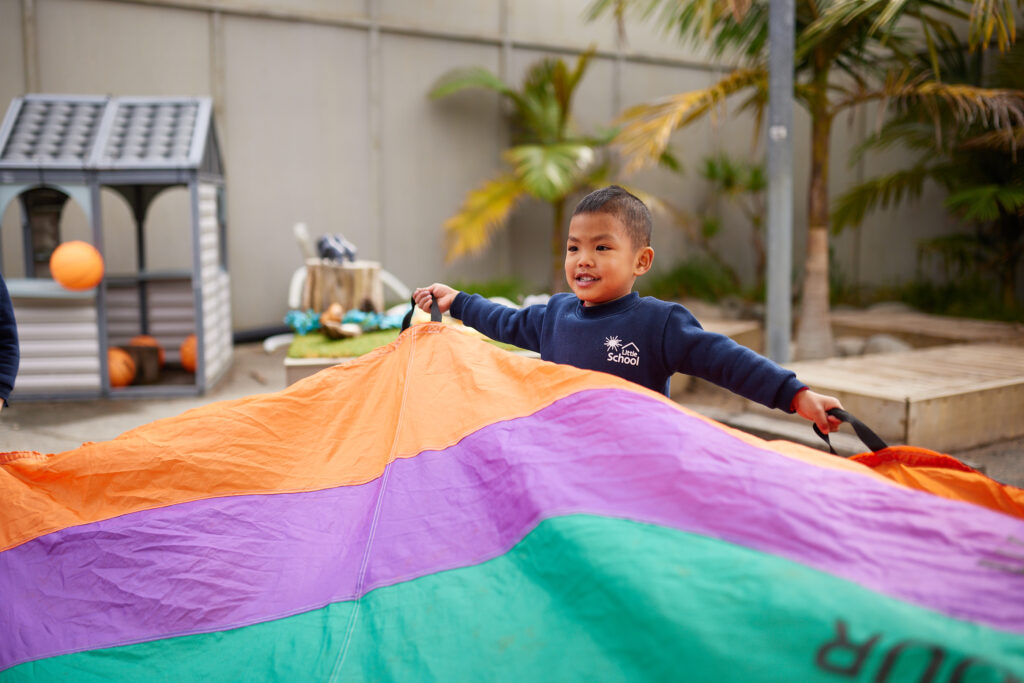
- Outdoor learning
- Brain breaks
- Movement opportunities
- Physical activity throughout the day
- Flexible seating
- Active learning experiences
Movement supports attention, emotional regulation, sensory processing and learning readiness.
For many years, I have observed that children often learn better after they have had opportunities to move. Long before I began studying sensory integration and brain development, I could see the differences movement made in children’s ability to participate, concentrate and learn.
Today, research is helping us understand why. Studies have found that outdoor play is associated with stronger school readiness, including cognitive and social-emotional development. Other research suggests that movement and physical activity can support executive functions such as attention, self-regulation, working memory and cognitive flexibility.
These are the very skills children rely on every day in the classroom.
For many neurodiverse children, movement also helps support sensory processing, emotional regulation and readiness to learn.
When visiting a school, look for evidence that movement is valued throughout the day.
A school that values movement is often a school that understands how children learn.
7. Sensory Awareness Matters
Many neurodiverse children experience the world differently through their senses.
A noisy classroom many feel overwhelming. Bright lights may be distracting. Crowded spaces may create anxiety.
Ask schools:
- How do you support sensory needs?
- Are there quiet spaces available?
- Can children access sensory tools if needed?
- How do you help children regulate throughout the day?
Schools that understand sensory processing are often far better equipped to support neurodiverse learners.
8. Genuine Partnerships With Families
Parents know their children better than anyone. The strongest schools understand this.
They work alongside families rather than positioning themselves as experts who know best.
Look for schools that:
- Listen
- Communicate regularly
- Welcome parent input
- Value collaboration
- Create shared goals
When families and schools work together, children benefit enormously.
9. Individualisation Over Standardisation
Every neurodiverse child is different. What works for one child may not work for another.
The best schools recognise this. Rather than applying one strategy to every child, they take time to understand individual needs and adapt accordingly.
This flexibility can make enormous difference in a child’s educational experience.
10. A School That Believes in Potential
Perhaps the most important question of all is:
“Do the people in this school genuinely believe my child can succeed?”
Children quickly absorb the expectations adults hold for them. When teachers believe in children, children begin believing in themselves.
- Find a school where staff see possibility.
- Find a school where strengths are recognised.
Find a school where differences are respected. - Find a school where your child feels they belong.