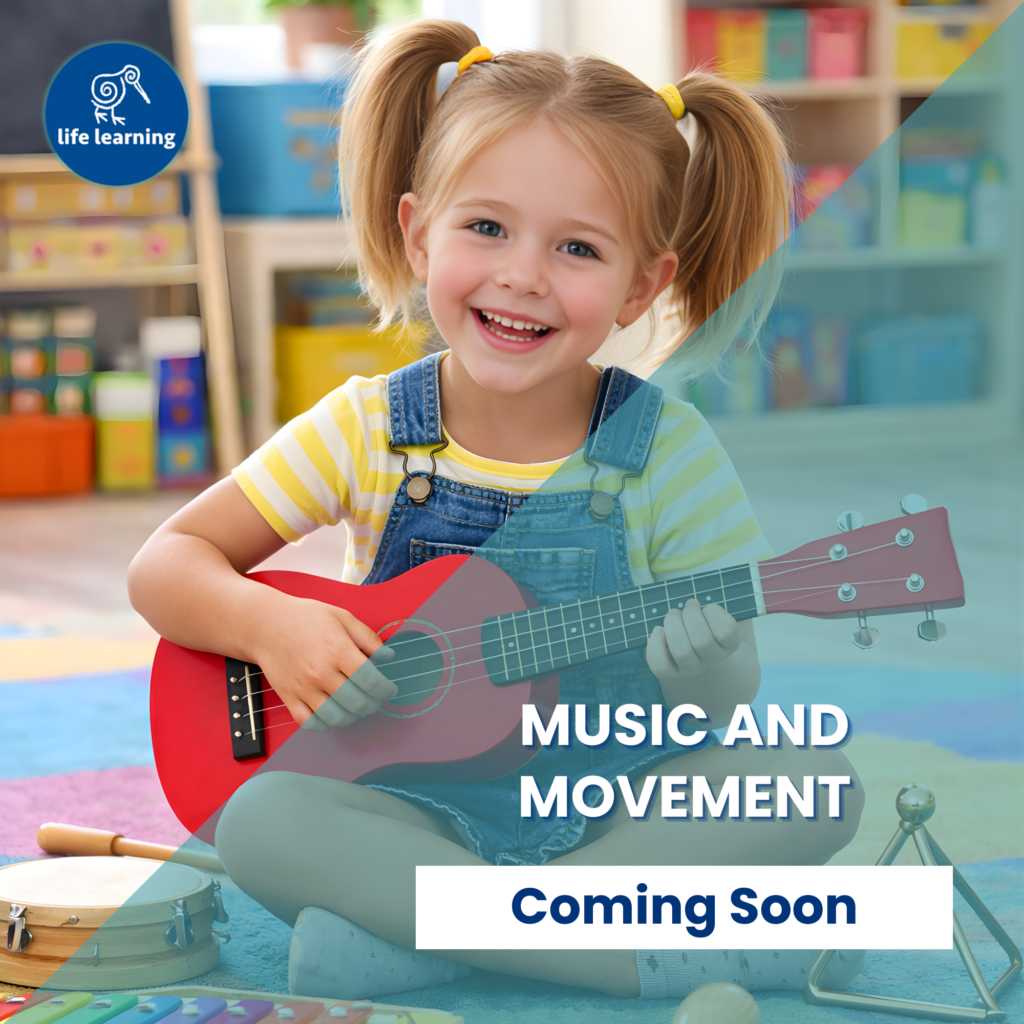
Music and Movement: Supporting Motor Development, Sensory Integration, Rhythm, and the Creative Brain
Course Overview
Music and movement are far more than fun extras in early childhood.
They support children’s motor development, body awareness, balance, coordination, rhythm, creativity, communication, joy, and confidence.
This course explores how music and movement experiences help children strengthen the foundations for learning through active, sensory-rich, playful engagement.
It looks at how rhythm, repetition, dance, song, finger plays, balance activities, and movement sequences support the whole child -body, brain, emotions, and imagination.
Why This Course Matters
Children learn through movement.
Current guidance continues to show that physical activity in childhood supports healthy growth, muscle and bone development, and motor and cognitive development.
Music experiences in the early years are also linked with gains in attention, memory, inhibitory control, and cognitive flexibility, especially when they are active and repeated over time.
In early childhood settings, music and movement also create belonging, enjoyment, participation, and rich opportunities for oral language and expression.
What You Will Learn
In this course, you will explore:
Why music and movement are essential for young children’s development
How rhythm and movement support balance, timing, coordination, and motor planning
How action songs, dance, and finger plays strengthen body control and bilateral coordination
How movement experiences support vestibular, proprioceptive, and interoceptive processing alongside the wider sensory systems children rely on for regulation and participation
How music and movement can help strengthen attention, self-regulation, memory, and engagement
How joyful movement supports creativity, imagination, and the expressive brain
How to use music and movement to support oral language, social connection, and confidence
How repetitive movement experiences may support more mature postural and movement patterns, while understanding that specific primitive reflex integration claims should be made cautiously because the intervention evidence is still developing
Practical ways to embed music and movement across your daily programme
What Makes This Course Valuable
This course brings together motor development, sensory foundations, rhythm, creativity, and practical teaching.
It helps educators understand that when children sing, sway, crawl, clap, spin, rock, stamp, balance, and move to rhythm, they are not just being entertained, they are building core foundations for coordination, regulation, participation, and learning.
Evidence-Aligned Focus
A careful reading of the research suggests three useful messages for practice.
First, active movement and rhythm clearly support children’s motor development, participation, and aspects of executive functioning. Second, vestibular, proprioceptive, and interoceptive processing matter for body awareness, balance, and regulation.
Third, while retained primitive reflexes are associated with weaker psychomotor outcomes in some studies, educators should avoid overstating claims that any one programme “inhibits” reflexes; it is more accurate to say that well-designed movement experiences can support the sensorimotor foundations that sit beneath learning and behaviour.
Who This Course Is For
This course is designed for:
Early childhood teachers and educators
Centre leaders and owners
Home-based educators
Teacher aides and support staff
Parents and caregivers wanting to support movement, rhythm, coordination, and creativity in everyday ways
It is especially relevant for educators wanting a stronger understanding of motor foundations, sensory-motor development, playful regulation strategies, and creative learning through music and movement.
Key Takeaway
Music and movement help children build the foundations for life and learning.
They support motor development, sensory processing, regulation, joy, communication, creativity, and participation.
When educators intentionally weave rhythm, dance, song, movement play, and sensory-rich experiences into the day, they strengthen both the learning brain and the moving body.
What Are You Waiting For?
Join Music and Movement and discover how rhythm, active play, and joyful movement can strengthen children’s bodies, support sensory-motor development, and nurture confident, creative, connected learners.