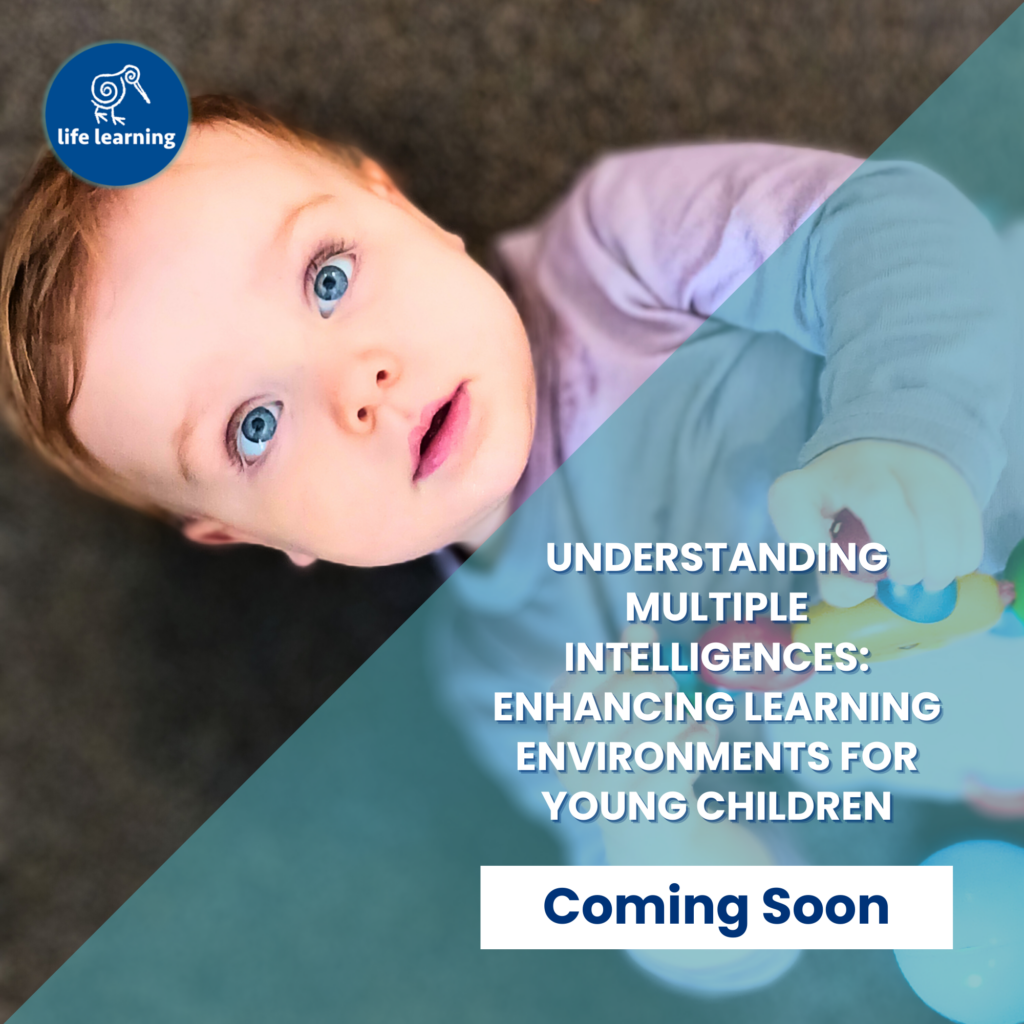
Understanding Multiple Intelligences: Enhancing Learning Environments for Young Children
Course Overview
This course explores Howard Gardner’s theory of multiple intelligences and why it still matters in early childhood education today.
It helps educators understand that children are not all “smart” in the same way, and that learning can be expressed through many different strengths, interests, and ways of engaging with the world.
Why This Course Matters
When educators recognise that children learn in different ways, they can create richer environments, more inclusive experiences, and stronger opportunities for every child to succeed.
Multiple intelligences encourage us to move beyond narrow views of ability and to value the many ways children think, communicate, create, move, solve problems, and relate to others.
What You Will Learn
In this course, you will explore:
What multiple intelligences are
Howard Gardner’s theory and its relevance to early childhood
The different ways children show competence and understanding
How to recognise children’s individual strengths
How to plan experiences that support a range of intelligences
How multiple intelligences can be seen in everyday teaching practic
How this theory supports more inclusive, responsive teaching.
Areas Explored
This course introduces intelligences such as:
Linguistic
Logical-mathematical
Musical
Bodily-kinaesthetic
Spatial
Interpersonal
Intrapersonal
Naturalistic
What Makes This Course Valuable
This course helps educators better understand the uniqueness of each child.
It supports teachers to reflect on how they plan, teach, and create environments so that children have many ways to learn, express themselves, and experience success.
Who This Course Is For
This course is designed for:
Early childhood teachers and educators
Centre leaders and owners
Home-based educators
Student teachers and new graduates
Parents and caregivers interested in children’s learning strengths
Key Takeaway
Children do not all learn in the same way.
When we recognise and respond to different intelligences, we create more inclusive, empowering, and meaningful learning experiences for every child.
What Are You Waiting For?
Join Multiple Intelligences and deepen your understanding of how children learn in different ways and how you can support those strengths in practice.