Plantar Reflex (Plantar Grasp): What It Is and Why It Matters
The plantar reflex, often called the plantar grasp reflex, is a primitive reflex in which a baby’s toes curl when pressure is applied to the sole of the foot. This guide explains what it looks like, when it normally fades, and what current research does and doesn’t tell us about it.
The term can be confusing. In medical settings, “plantar reflex” often means the Babinski response, where the big toe lifts when the sole is stroked. This page is about the plantar grasp reflex.
What is the Plantar Reflex?
When pressure is applied to the ball of a baby’s foot, the toes curl as if to grip, and the foot cups (StatPearls). It is the foot’s version of the hand’s palmar grasp.
When does the Plantar Reflex appear and fade?
The plantar grasp is present in newborns and fades gradually. Clinical references describe the toe grasp as gone by about 6 to 12 months (University of Utah), and some sources give up to about 15 months. Treat this as a range.
What does the Plantar Reflex do?
The reflex is thought to prepare the feet for later standing and walking. Practitioners suggest it contributes to early foot awareness, balance and posture.
What if the Plantar Reflex stays active in older children?
Some practitioners observe that when the plantar reflex remains active beyond infancy, children may grip with their toes, walk on their toes or find balance harder.
The research is still developing. A review of studies on children without neurological conditions concluded that the evidence is not yet strong enough to link persistent reflexes to learning or behaviour difficulties (review). Balance and walking patterns have many possible causes.
What parents and educators may notice
Practitioners sometimes link the following observations with an active plantar reflex. None of them confirms it, and none is a diagnosis:
- Walking on the toes much of the time
- Curling or gripping the toes when standing
- Difficulty with balance or feeling steady
- Dislike of bare feet or certain textures underfoot
Playful movement ideas
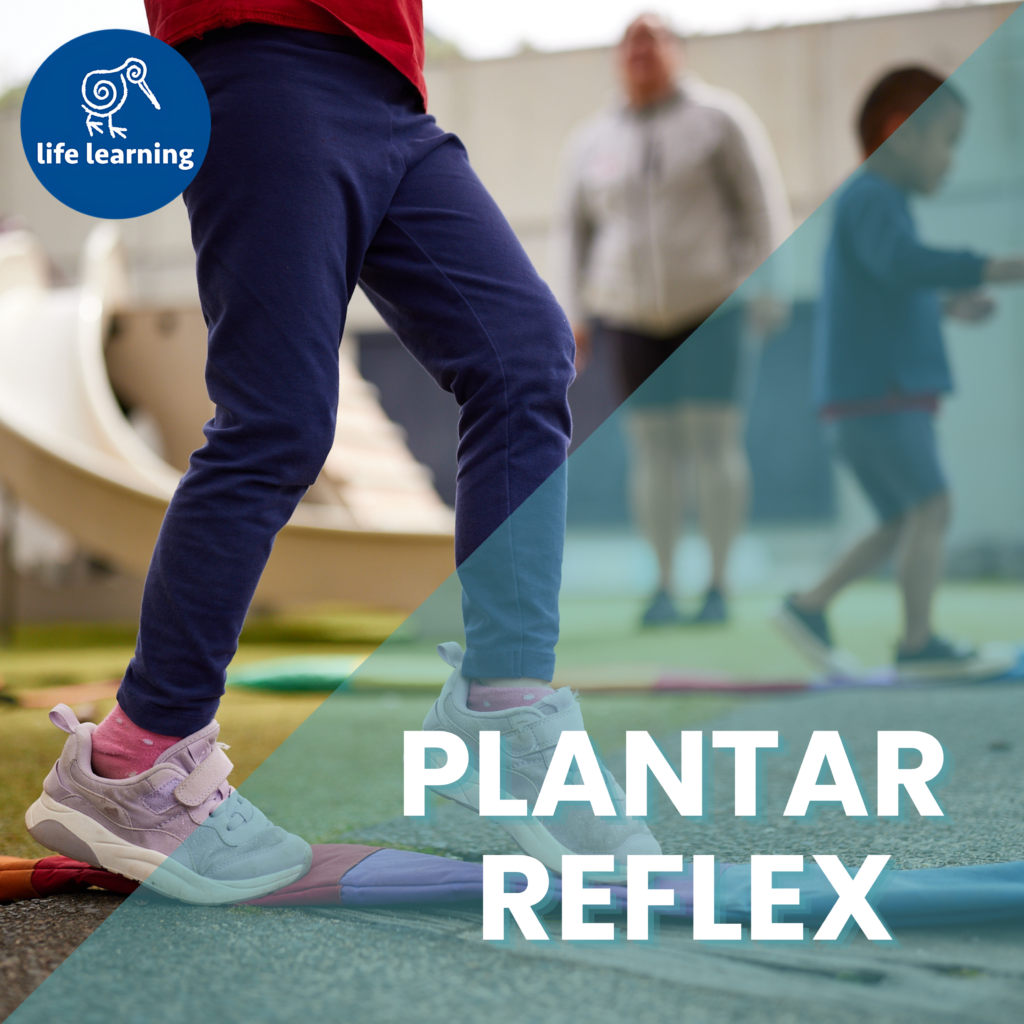
Barefoot play on varied surfaces such as grass, sand and carpet gives feet rich sensory experience. Balance beams, stepping stones and picking up scarves with the toes are fun ways to build foot awareness. You can find more ideas on the Life Learning Academy resources page.
When to seek advice
If a child walks on their toes most of the time, or you’re concerned about their balance or walking, talk to a GP, paediatrician, physiotherapist or another qualified professional. This guide shares general educational information and is not a diagnosis or a substitute for individual advice.
Frequently Asked Questions
Is the plantar reflex the same as the Babinski reflex?
No. The plantar grasp makes the toes curl under pressure, while the Babinski response is when the big toe lifts as the sole is stroked. People sometimes use “plantar reflex” for either one.
At what age does the plantar grasp go away?
Sources vary from about 6 to 15 months.
How is the plantar grasp reflex tested?
In babies, a health professional presses on the ball of the foot, and the toes curl as if to grip (StatPearls). Reflex assessment in older children should be done by a qualified professional.
Learn more about the Plantar Reflex with Life Learning Academy
If you’d like to explore this reflex in depth, our online course explains it, how to observe it and practical movement activities. It includes testing guidance, an exercise toolbox, music and movement resources, downloadable activity cards and a support plan template.