
Rooting Reflex: What It Is and Why It Matters
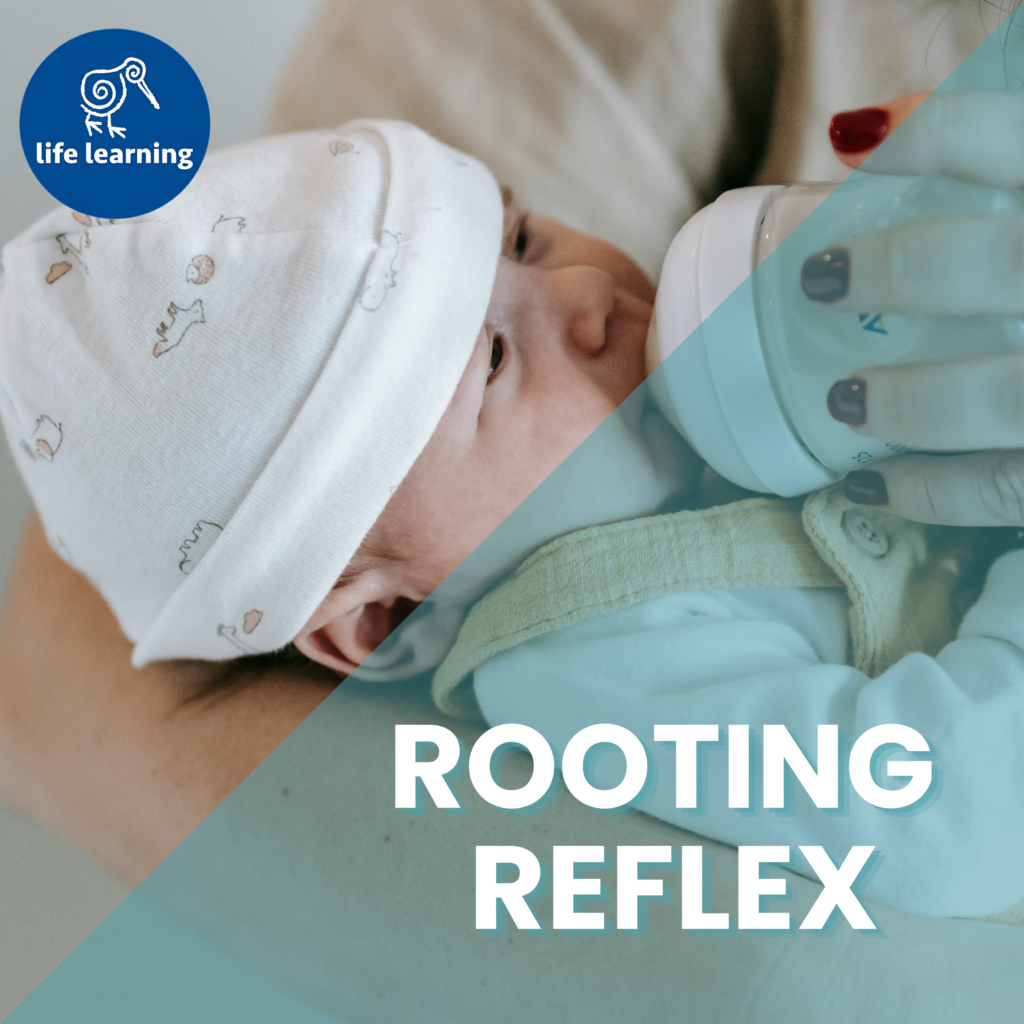
The rooting reflex is a primitive reflex that helps newborns find the breast or bottle and start feeding. This guide explains what the rooting reflex looks like, when it normally fades, and what current research does and doesn’t tell us about it.
What is the rooting reflex?
When the corner of a baby’s mouth or the skin around it is touched or stroked, the baby turns their head toward the touch, opens their mouth and moved their tongue forward. This helps them latch on and feed (StatPearls). The sucking reflex is different, because it starts when the roof of the mouth is touched.
What does the rooting reflex do?
The rooting reflex helps newborns locate food in their first months, before they can ask for it. It’s also an early hunger cue, so a baby who turns their head and opens their mouth is often showing they’re ready to feed.
What if the rooting reflex stays active in older children?
Some practitioners observe that when the rooting reflex remains active beyond infancy, children may be very sensitive around the mouth and face, droll, or find eating and speech harder.
The research is still developing. Feeding and speech difficulties have many possible causes, so the rooting reflex is one possible piece of a child’s picture, never the whole explanation.
In medical settings, a rooting reflex that persist well past six months, particularly alongside other primitive reflexes, is treated as something to check, because it can point to a nervous system concern (StatPearls).
What parents and educators may notice
Practitioners sometimes link the following observations with an active rooting reflex. None of them confirms it, and none is a diagnosis:
- Sensitivity or discomfort around the mouth or face
- Drooling beyond usual age
- Messy eating or difficulty chewing
- Speech that is hard to understand
- Frequent hand-to-mouth habits such as thumb sucking
Playful movement and oral play ideas
Varied play involving the face and mouth is good for every child. Blowing bubbles, blowing through straws, singing, making silly faces and exploring different safe, age-appropriate food textures all give the mouth and face rich experiences. You can find more ideas on the Life Learning Academy resources page.
When to seek advice
If a baby is older than six months still shows a strong rooting response, or you’re concerned about a child’s feeding, drooling or speech, talk to a GP, pediatrician, speech-language therapist or another qualified professional. This guide shares general educational information and is not a diagnosis or a substitute for individual advice.
Frequently Asked Questions
At what age does the rooting reflex go away?
It usually fades between about four and six months of age.
What is the difference between the rooting reflex and the sucking reflex?
The rooting reflex starts when the corner of the mouth or cheek is touched, and the baby turns toward the touch. The sucking reflex starts when the roof of the mouth is touched, and the baby begins to suck.
Is the rooting reflex a sign of hunger?
It can be. A baby who turns their head and opens their mouth is often ready to feed, though babies also root when they’re comforted or half-asleep.
Does a retained rooting reflex affect speech?
No clear cause-and-effect link has been shown. Some practitioners observe mouth sensitivity and speech difficulties in children with active reflexes, but speech has many influences. If you’re concerned, a speech-language therapist can help.
Learn more about the rooting reflex with Life Learning Academy
If you’d like to explore this reflex in depth, our online course explains it, how to observe it and practical movement activities. It includes testing guidance, an exercise toolbox, music and movement resources, downloadable activity cards and a support plan template.