Palmar Reflex: What It Is and Why It Matters
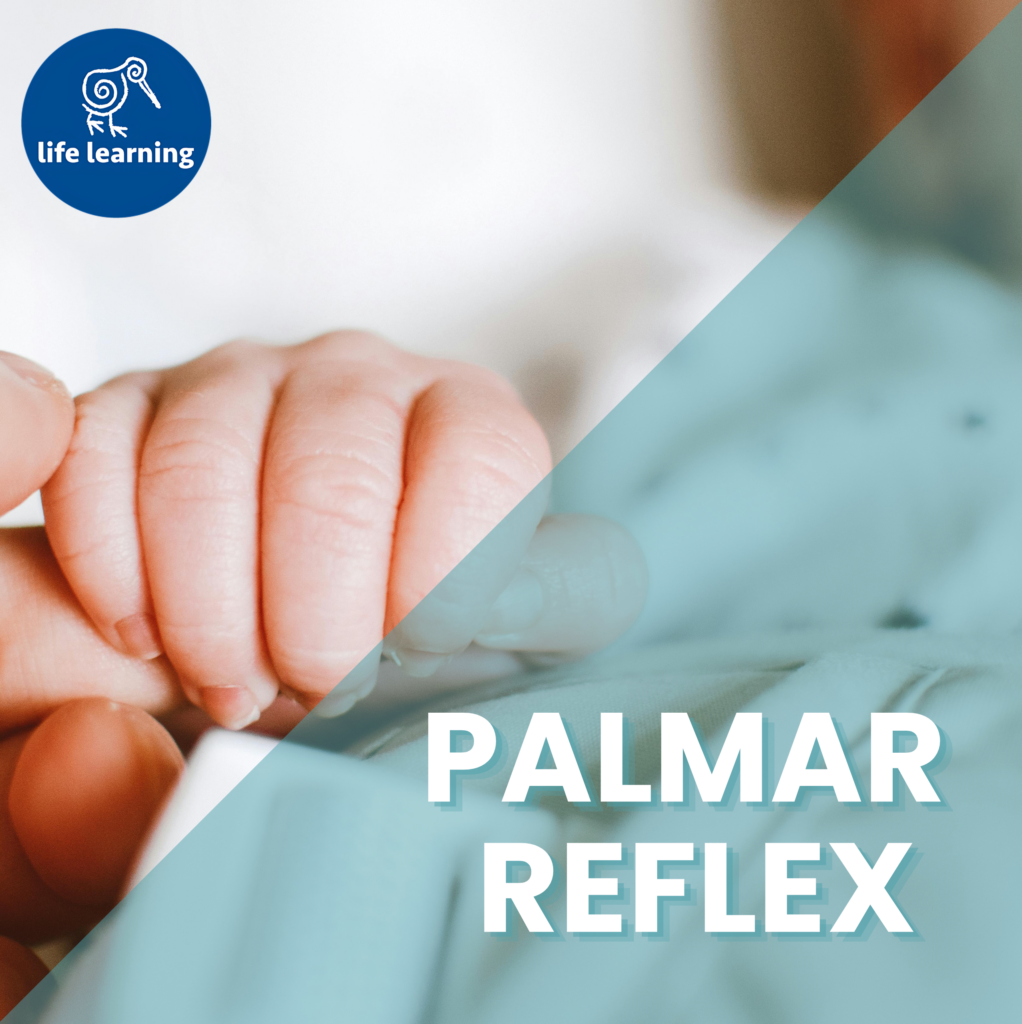
The palmar reflex, also called the palmar grasp reflex, is a primitive reflex that makes a newborn’s fingers curl around anything placed in their palm. This guide explains what it looks like, when it normally fades, and what current research does and doesn’t tell us about it.
What is the palmar reflex?
When you stroke or press a newborn’s palm, their fingers close around your finger. Health professionals check this reflex as a routine part of a newborn’s neurological examination.
When does the palmar reflex appear and fade?
The palmar reflex appears at around 16 weeks of pregnancy and is present in newborns. It usually disappears by about six months of age, as voluntary grasping takes over (StatPearls).
What does the palmar reflex do?
Babies a few months old can’t yet organise their movements to grab an object on purpose. The palmar reflex is thought to create a basic movement pattern that supports the later development of voluntary grip.
What if the palmar reflex stays active in older children?
Some practitioners observe that when the palmar reflex remains active beyond infancy, children may find fine motor tasks harder, including pencil grip and handwriting.
The research is still developing. A review of studies on children without neurological conditions concluded that the evidence is not yet strong enough to link persistent reflexes to learning or behaviour difficulties (review). Handwriting and focus challenges have many possible causes, so the palmar reflex is one possible piece of a child’s picture.
In babies, a palmar grasp that is weak before six months, or still strong after six months, is treated as something to check (StatPearls).
What parents and educators may notice
Practitioners sometimes link the following observations with an active palmar reflex. None of them confirms it, and none is a diagnosis:
- A tight or awkward pencil grip
- Hands that tire quickly when writing
- Difficulty with buttons, scissors or other fine motor tasks
- Messy or effortful handwriting
Playful movement ideas
Hand and finger play is good for every child. Squeezing play dough, finger painting, threading beads, climbing and hanging from play equipment all strengthen hands and develop coordination. You can find more ideas on the Life Learning Academy resources page.
When to seek advice
If a baby older than six months still has a strong grasp reflex, or a child has ongoing difficulty with writing or hand skills, talk to a GP, pediatrician, occupational therapist or another qualified professional. This guide shares general educational information and is not a diagnosis or a substitute for individual advice.
Frequently Asked Questions
At what age does the palmar reflex go away?
It usually fades by about six months of age.
Does a retained palmar reflex cause handwriting problems?
No clear cause-and-effect link has been shown. Some practitioners observe hand difficulties in children with active reflexes, but handwriting challenges have many causes.
Why do newborns grip your finger?
It’s the palmar reflex. When something touches a newborn’s palm, their fingers close around it automatically, so the baby isn’t choosing to hold on. The reflex usually fades by about six months, as voluntary grasping takes over (StatPearls).
Learn more about the palmar reflex with Life Learning Academy
If you’d like to explore this reflex in depth, our online course explains it, how to observe it and practical movement activities. It includes testing guidance, an exercise toolbox, music and movement resources, downloadable activity cards and a support plan template. You can also read our blog article on 5 primitive reflexes that impact early childhood development.